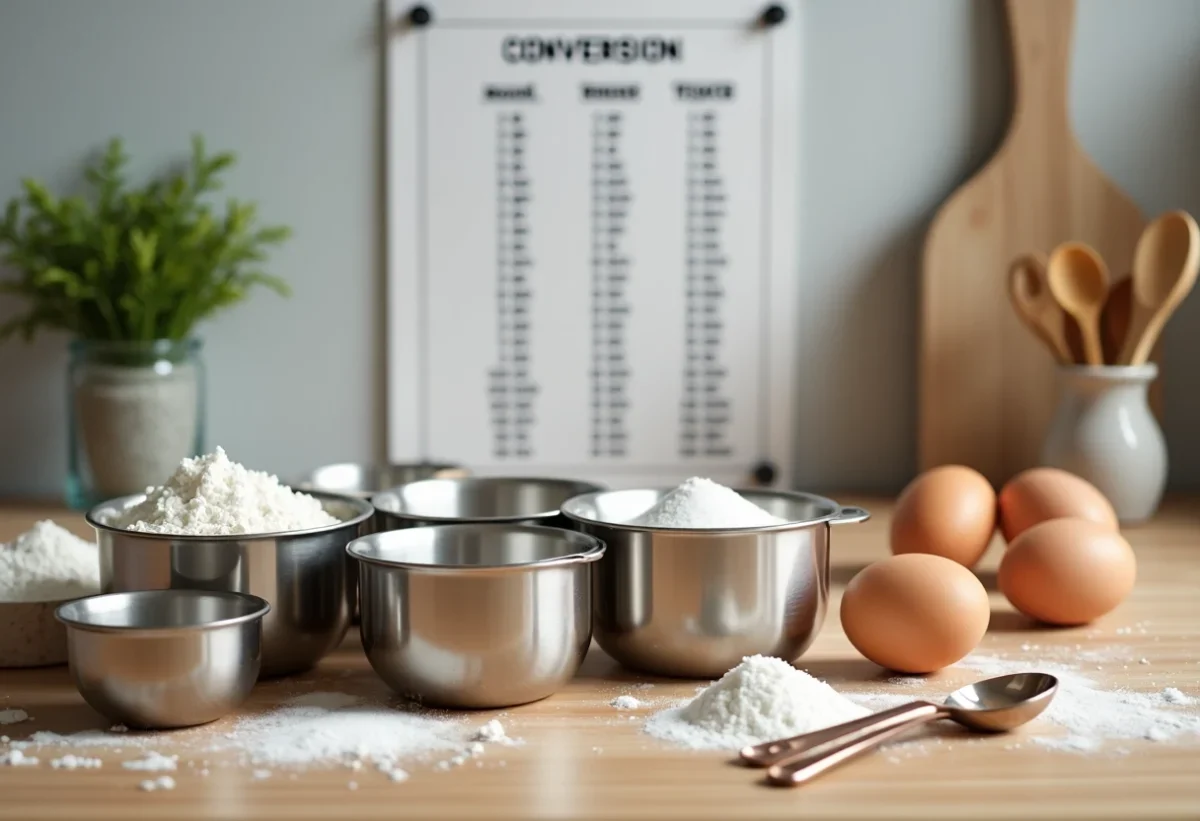
In cooking, achieving the desired result often relies on a proper mastery of measurements. One gram too many or one spoon less can turn a moist cake into a dry disaster. However, recipes are sometimes written in different units: grams, ounces, cups, milliliters. These variations can confuse even the most diligent cooks.
To avoid any missteps, make sure to know a few basic conversions. For example, 1 cup is approximately 240 milliliters, while 1 ounce is about 28 grams. These little tips allow you to easily switch between American, European, or other recipes, ensuring the success of every dish prepared.
The Basics of Conversions in Cooking
In cooking, understanding volume and mass measurements is essential to ensure the success of your preparations. Volume measurements, particularly common in North America, include cups, tablespoons, and teaspoons. These units can measure both liquids and dry ingredients like flour or sugar.
Mass measurements, on the other hand, are used to assess dry ingredients, fats like butter, and elements whose volume is more complex to determine.
Table of Common Conversions
| Ingredient | Volume | Mass |
|---|---|---|
| Butter (melted) | 1 cup | 227 g |
| White sugar | 1 cup | 200 g |
| White flour | 1 cup | 130 g |
For a quick conversion between units, consider these equivalents:
- 1 cup = 250 milliliters
- 1 liter = 4 cups
- 1 ounce = 28 grams
- 1 kilogram = 2 pounds
The conversion ‘Cup to grams’ is particularly useful when following American recipes. For example, a cup of flour is approximately 130 grams, while a cup of white sugar corresponds to 200 grams.
For temperature measurements, note that 0°C is equivalent to 32°F and 100°C to 212°F. Quebec recipes often use Fahrenheit, while the rest of the world prefers Celsius.
Mastering these conversions allows you to navigate between different recipes with confidence and precision, ensuring the success of your culinary creations.
Techniques and Tips for Accurate Measurements
In cooking, the precision of measurements is fundamental to achieving consistent and flavorful results. Use a kitchen scale to weigh dry ingredients like flour or sugar. This helps avoid errors related to the variable density of ingredients.
For liquids, prefer measuring cups with clear graduations in milliliters and cups. Pour slowly and check at eye level for an accurate reading.
Some practical tips:
- Tablespoons and teaspoons: use specific cooking spoons that offer standardized measurements. One tablespoon equals 15 ml and one teaspoon equals 5 ml.
- Temperature measurements: a kitchen thermometer is essential for checking precise temperatures when cooking meats or candies. To convert, note that 180°C equals 350°F.
For recipes requiring quick conversions, use a reliable conversion chart. For example, 1 cup of melted butter weighs 227 grams, while 1 cup of white sugar weighs 200 grams.
Consistency in measurements ensures the success of your recipes and the repeatability of your dishes. Avoid approximate conversions and invest in quality measuring tools for optimal culinary results.