
Renewing your wardrobe each season doesn’t mean buying everything new. A few well-chosen pieces are enough to transform an existing wardrobe, provided you know where to focus your budget and what shopping habits to adopt. Current fashion offers allow you to target sustainable clothing without sacrificing style, prioritizing quality of cut and material.
Cost per wear: the calculation that changes fashion purchases
Have you ever noticed that a cheap t-shirt worn three times ends up costing more than a piece priced twice as much worn fifty times? This reasoning, known as “cost per wear,” involves dividing the price of a garment by the number of times you actually wear it.
A concrete example: a lightweight canvas jacket bought on sale for 40 euros but that pills after five washes costs 8 euros per wear. A similar jacket at 90 euros, worn for two full seasons (let’s say forty times), comes to just over 2 euros per wear. The cheapest garment is almost never the most economical.
This logic particularly applies to the key pieces in your wardrobe: jacket, dress pants, shoes. For these categories, looking for Cœur 2 Mode’s fashion offers on brands with tailored cuts enhances longevity without blowing the budget. On the other hand, for very trendy pieces (a seasonal color, a bold print), a low price is more justified, since their lifespan in your rotation will be short.
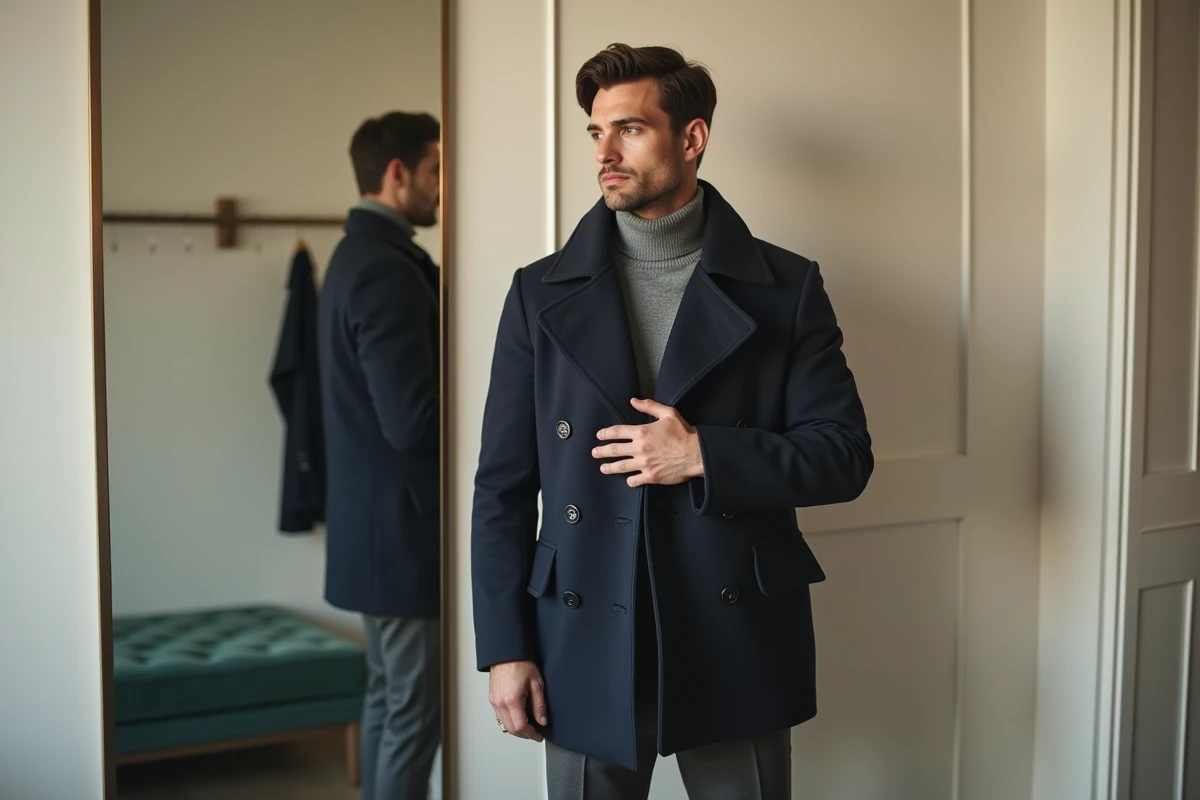
Quiet luxury and minimalism: spotting the true seasonal basics
Since 2023, fashion consumption reports (notably the Lyst Index 2024, relayed by Vogue Business) document a clear shift. Simple, well-cut pieces are seeing a strong increase in searches and sales, at the expense of flashy logos and ephemeral micro-trends. Wool, cashmere, thick cotton: quality materials are taking precedence.
This movement, often summarized under the term “quiet luxury,” has a practical consequence for your seasonal purchases. Instead of chasing the latest trendy color, it’s better to invest in basics whose cut and material withstand changes in trend.
Three criteria to evaluate a basic before purchase
- The fabric density: a jersey that’s too thin will deform after the first wash. Squeeze the fabric between your fingers; you should feel some resistance. A sufficiently dense weight ensures better longevity.
- The interior finishes: turn the garment inside out. Clean seams, overlocked edges (not cut raw) indicate a level of craftsmanship that extends the life of the piece.
- The simplicity of the cut: a well-placed shoulder, an armhole that doesn’t pull, a straight fall. A successful basic requires no adjustments to look good.
Applying these three checks in the fitting room or upon receiving an order takes less than a minute and avoids most disappointing purchases.
Second-hand and fashion offers: two complementary channels
The 2024 ThredUp report on second-hand fashion reveals a marked change in behavior. An increasing share of consumers now starts with resale platforms (Vinted, Vestiaire Collective, Depop) even before checking traditional fashion sites.
This “second-hand first” reflex is changing the way we enhance a wardrobe. We no longer seek the latest collection but the right piece, already in circulation, at a reduced price. For timeless basics (trench coat, raw denim, blazer), second-hand offers an often unbeatable quality-price ratio, as these garments maintain their stylistic relevance for years.
When to prioritize new
Second-hand has its limits. For shoes (the imprint of the previous foot distorts the insole), underwear, and very fine knits, buying new remains preferable. Seasonal offers on these categories allow you to find quality pieces without paying full price.
Another case where new is justified: technical pieces. A dress in stretch fabric or pants with an elastic waistband lose their support after many wears. It’s better to buy them new and enjoy their maximum elasticity from the start.
Creating a seasonal look with just five pieces
Instead of an endless list, here’s a concrete exercise. Take five garments from your closet and check if they fulfill these functions:
- A neutral top (white, beige, gray) that pairs with everything else in your wardrobe.
- A structured bottom (straight jeans, dress pants, midi skirt) that defines the silhouette.
- An intermediate layer (light jacket, cardigan, blazer) suitable for the temperature variations of the season.
- An accent piece (bright color, print, special texture) that adds character to the look without dominating.
- Versatile shoes, comfortable from the first wear, neither too dressy nor too sporty.
If any of these five functions is missing, that’s where your next purchase makes sense. Not before. This method avoids impulsive purchases and focuses the budget on the actual weak link in your wardrobe.
Renewing your style each season is less about the number of pieces purchased than about the precision of choices. A wardrobe of five well-thought-out pieces outfits better than a closet full of clothes never worn. Evaluating cost per wear, checking finishes, alternating between new and second-hand: these habits transform every fashion purchase into a sustainable investment for your silhouette.