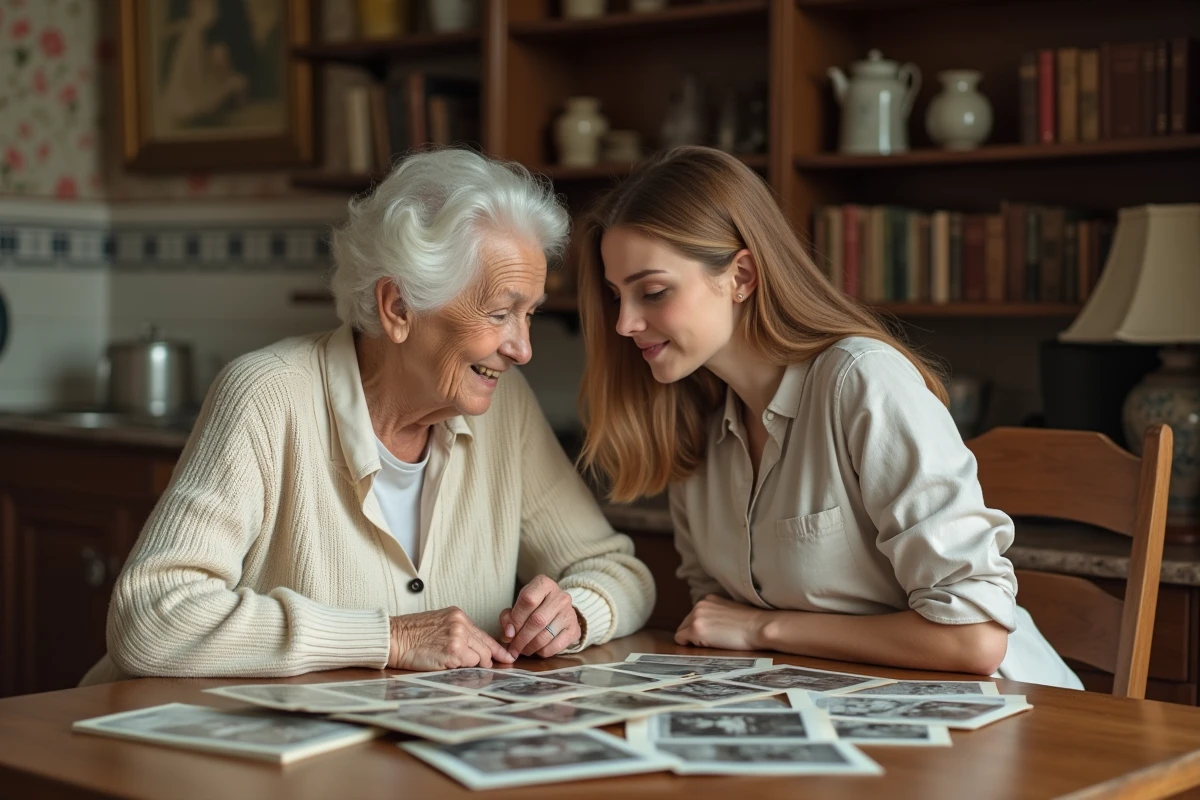
The transmission of family history relies on a work of collection, preservation, and highlighting of often scattered sources. Valuing one’s roots is not limited to creating a family tree: it involves cross-referencing archives, gathering oral testimonies, and choosing an appropriate medium for the memory one wishes to convey.
Cross-referencing public archives and private collections to validate your genealogical research
We regularly observe that genealogical research encounters a methodological problem: family documents (letters, photographs, family booklets) are used in isolation, without cross-referencing with public archives. This approach produces incomplete or even erroneous narratives.
Parish registers, civil status records, censuses, and notarial archives form the documentary foundation. Each record (birth, marriage, death) provides cross-referenced clues: names of witnesses, professions, places of residence. Cross-referencing a private document with an official record validates or invalidates the information.
Digitized departmental archives facilitate this process. Most French departments offer online access to their registers, sometimes dating back to the 16th century. We recommend starting with the civil status records of the birthplace of the oldest identified ancestor, then tracing back branch by branch. Resources like cultivonsnosracines.fr help structure this research journey by linking the various stages of document collection.
A common pitfall: namesakes. Before the 19th century, surnames varied from one record to another. The only reliable defense is to cross-reference the date, place, and declared lineage from at least two distinct sources.

Oral testimonies and family memory: collection protocol
An unrecorded oral testimony is a lost testimony. Family memory largely relies on stories passed down orally, whose reliability diminishes with each generation. Formalizing this collection changes the quality of the available material.
The protocol we recommend is based on three principles:
- Systematically record (audio or video) with the witness’s consent, noting the date and context of the interview to create an exploitable source
- Prepare a chronological thread, but allow the witness to digress: spontaneous anecdotes often provide the most valuable details about daily life in a given era
- Confront the narrative with existing documents in the days that follow, to identify areas of agreement and points to verify in the archives
Older individuals tend to remember past events better than recent facts. We advise starting the interview with the witness’s childhood, then progressing to significant family events (marriages, relocations, wars).
Digitization and indexing of testimonies
A raw audio file of two hours is unusable without indexing. After recording, create a timestamped summary (minute by minute) with the topics discussed and the names mentioned. This preservation work transforms a simple memory into a documentary source accessible to future generations.
Connecting family memory and the history of the territory
Communities and heritage organizations organize workshops where residents deposit testimonies, photographs, and family trees, which are then integrated into exhibitions or digital archives open to the public. This trend, developing since the mid-2020s, allows for linking a family’s history to that of a territory.
This collective highlighting changes the scope of genealogical work. A family migration path, placed in the economic context of a valley or industrial basin, takes on a historical dimension that a private narrative alone cannot offer.
Municipal and inter-municipal archives often hold photographic collections, council deliberations, and cadastral plans that illuminate the daily life of a place at a given time. Cross-referencing these documents with your own research enriches the family narrative and provides a verifiable foundation.
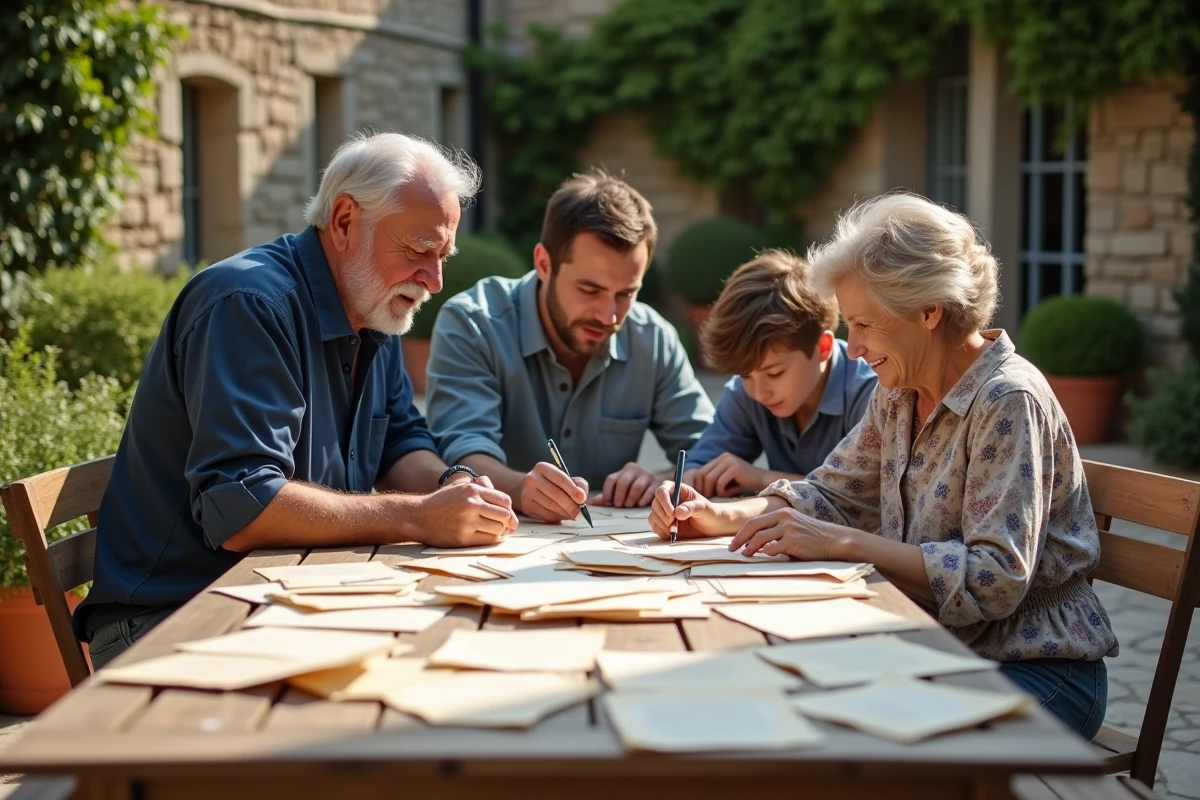
Digital tools and AI applied to valuing roots
In recent years, major players in genealogy (MyHeritage, Ancestry) have integrated generative AI functions capable of colorizing old photos and suggesting biographical narratives based on entered genealogical data. These tools change the work of valuing family heritage.
Automatic colorization and resolution enhancement make degraded photos usable for an album or exhibition. However, the suggestion of narratives requires caution: AI generates plausible text, not verified text. We recommend treating these suggestions as working hypotheses, never as established facts.
Choosing an appropriate medium for restitution
The choice of medium determines the durability and accessibility of the transmitted memory. Several options coexist:
- The family biographical book, printed in a few copies, remains the most enduring and shareable format during family gatherings
- A private website or blog allows for the integration of digitized documents, audio recordings, and interactive trees, with access controlled by password
- Collaborative genealogical platforms offer broader visibility and facilitate connections with unknown family branches, but raise the question of long-term data preservation entrusted to a third party
No digital format guarantees longevity beyond a few decades without regular file migration. Keeping a physical copy (print, archived USB drive) of the most valuable documents remains a basic precaution for preserving family heritage.
The valuation of your roots gains rigor when it combines written sources, oral testimonies, and digital tools, each compensating for the limitations of the others. The amateur archivist work represented by this approach produces content that is transferable, verifiable, and rooted in the history of both a territory and a family.