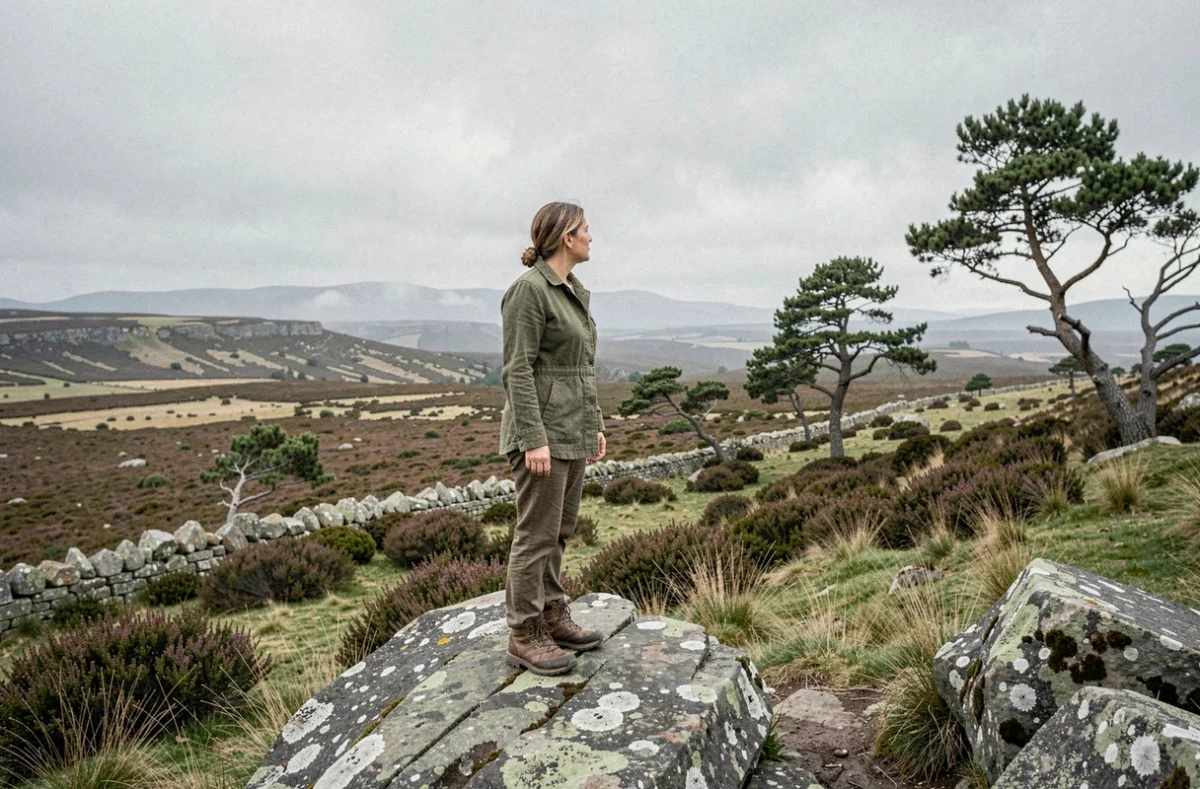
Lozère is not a place to visit by ticking off a catalogue of attractions. The least populated department in mainland France has a UNESCO designation that recognizes not isolated natural sites, but a cultural landscape shaped by Mediterranean agropastoralism. Understanding this distinction changes the way you explore the Causses, the Cévennes and Mont Lozère.
Agropastoralism and UNESCO status: what the Causses and Cévennes designation really protects
The inscription of the Causses and Cévennes on the World Heritage List recognizes a living system in which extensive livestock farming, transhumance routes and Cévennes terraces have shaped vegetation, biodiversity and rural architecture over several centuries. Reducing this designation to a landscape label means overlooking the very reason it was created.
Pastoral practices maintain the dry grasslands of the Causses, the high-altitude meadows of Mont Lozère and the chestnut groves of the Cévennes valleys. Without livestock, these habitats would become overgrown within a few decades. The issue is not aesthetic; it is ecological and economic.
Several farmers welcome visitors to their farms, particularly on the Causse Méjean and around Florac. Watching Pélardon cheese being made or joining a herd on its way to summer pastures offers a tangible understanding of the region, far beyond simply admiring the view. Detailed routes and contact information for producers who welcome visitors are available at https://tourisme48.fr/, which brings together activities by sector and season.
International Dark Sky Reserve: discovering Lozère after dark
In 2018, Cévennes National Park received the International Dark Sky Reserve designation. This recognition reflects efforts to reduce light pollution in partnership with local communities, not simply the region’s distance from major cities.
The quality of Lozère’s night skies makes it one of the few places in France where the Milky Way remains visible to the naked eye in all its detail. Stargazing is best on the open plateaus (Méjean and Sauveterre) and along the ridges of Mont Lozère, where the near-total absence of artificial lighting creates ideal conditions.
Several providers offer guided evenings with telescopes, timed around lunar phases and meteor showers. Choosing moonless nights between May and October makes deep-sky objects easier to see. This nighttime experience extends a day of hiking and adds a dimension that conventional daytime itineraries do not offer.
The menhirs of Les Bondons and Lozère’s little-known megalithic heritage
The Les Bondons plateau, between Mont Lozère and the Causse de Sauveterre, is home to nearly two hundred menhirs spread across just a few square kilometers. It is one of France’s most densely concentrated megalithic sites, yet it remains largely absent from general guides to Lozère.
These granite monoliths, often modest in size, differ from the Breton alignments in their seemingly random distribution across rolling terrain. Their exact purpose is still debated among archaeologists, but their placement appears to be linked to ancient pastoral routes, reflecting the region’s agropastoral character.
A waymarked interpretive trail takes visitors past the main groups of stones without the need for a guide. The terrain is open, not particularly challenging and suitable for families. The Les Bondons plateau offers a distinct archaeological perspective from the usual itineraries focused on gorges and caves.
Mont Lozère: understanding a landscape shaped by practices and seasons
Mont Lozère reaches its highest point along wind-swept granite ridges covered in broom heath and peat bogs. The landscape changes dramatically with the seasons: snow-covered and almost inaccessible in winter, carpeted with daffodils in spring, and scorched by the sun in August.
This massif is more than a scenic viewpoint. Its granite hamlets (Mas Camargues, Le Pont-de-Montvert) bear witness to a way of life adapted to altitude and isolation. Slate roofs, field walls and béals (gravity-fed irrigation channels) tell the story of centuries of adaptation to the demands of the terrain and climate.
We recommend exploring Mont Lozère through the ways people have used it, rather than simply heading for its summits:
- Follow a waymarked transhumance route between Le Bleymard and the summit of Finiels, looking out for traces of pastoral infrastructure (enclosures, watering troughs and wayside crosses)
- Visit the Mont Lozère Ecomuseum in Le Pont-de-Montvert, which documents agropastoral practices and Cévennes history, including the Camisard uprising
- Explore the peat bogs at Col de Finiels with a naturalist guide to understand the role these wetlands play in Lozère’s water cycle
Mont Lozère can be read as a palimpsest of overlapping practices, from megalithic times to contemporary livestock farming. This perspective adds considerably to a hike compared with simply collecting viewpoints.
The Tarn Gorges and Causse Méjean: access rules and restrictions to know
The Tarn Gorges attract most of Lozère’s summer visitors. Canoeing between Sainte-Enimie and Le Rozier remains the signature activity, but visitor pressure on some stretches means there are rules that visitors sometimes only discover once they arrive.
The core zone of Cévennes National Park has strict regulations on bivouacking, foraging and motorized traffic. Wild camping is prohibited in the core zone, while bivouacking is permitted only between 7 p.m. and 9 a.m., with no fires. On the Causse Méjean, pastoral tracks are not tourist roads: motorized access is often restricted to protect livestock and the flora of the limestone grasslands.
A few pointers for a stay that respects the region:
- Book canoe trips early in the season (May–June) to avoid the crowds in the Tarn Gorges in July and August
- Check local access restrictions on the tracks of the Causse Méjean before planning a mountain biking or 4×4 route
- Respect designated wildlife quiet zones (for griffon vultures and otters) along the cliffs and waterways
Lozère’s strength lies in its low population density and the continuity of its rural practices. The Tarn Gorges, the Causses, Mont Lozère and the Cévennes are not separate attractions, but different facets of the same regional system. Exploring the department through its ways of life, regulatory constraints and living heritage turns a tourist trip into an understanding of a place whose very structure resists homogenization.