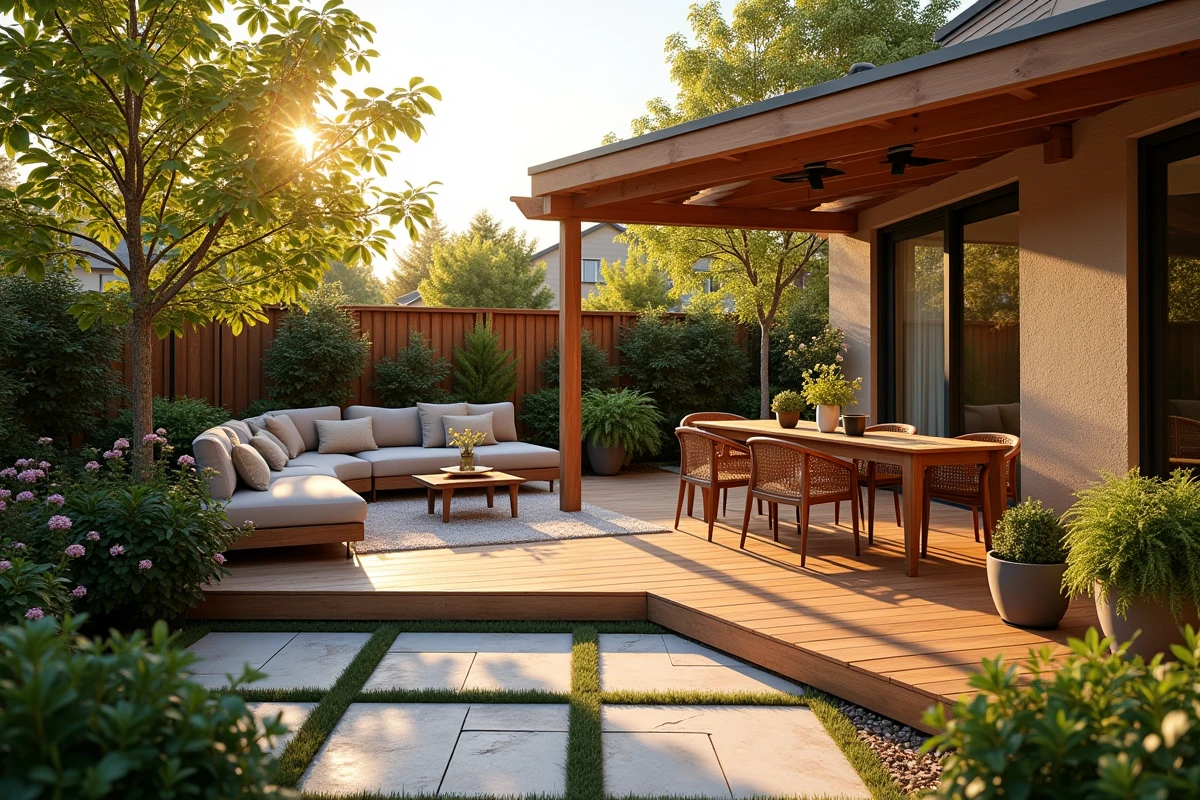
A narrow balcony, a concrete courtyard, or a long garden: each outdoor configuration presents its own constraints. Designing an outdoor space that works on a daily basis requires choosing the right materials, considering circulation, and planning for maintenance from the start. Here are ten concrete ideas, listed in no particular order, to transform your outdoor area into a space that is both practical and pleasant to live in.
1. Composite wood terrace to reduce maintenance
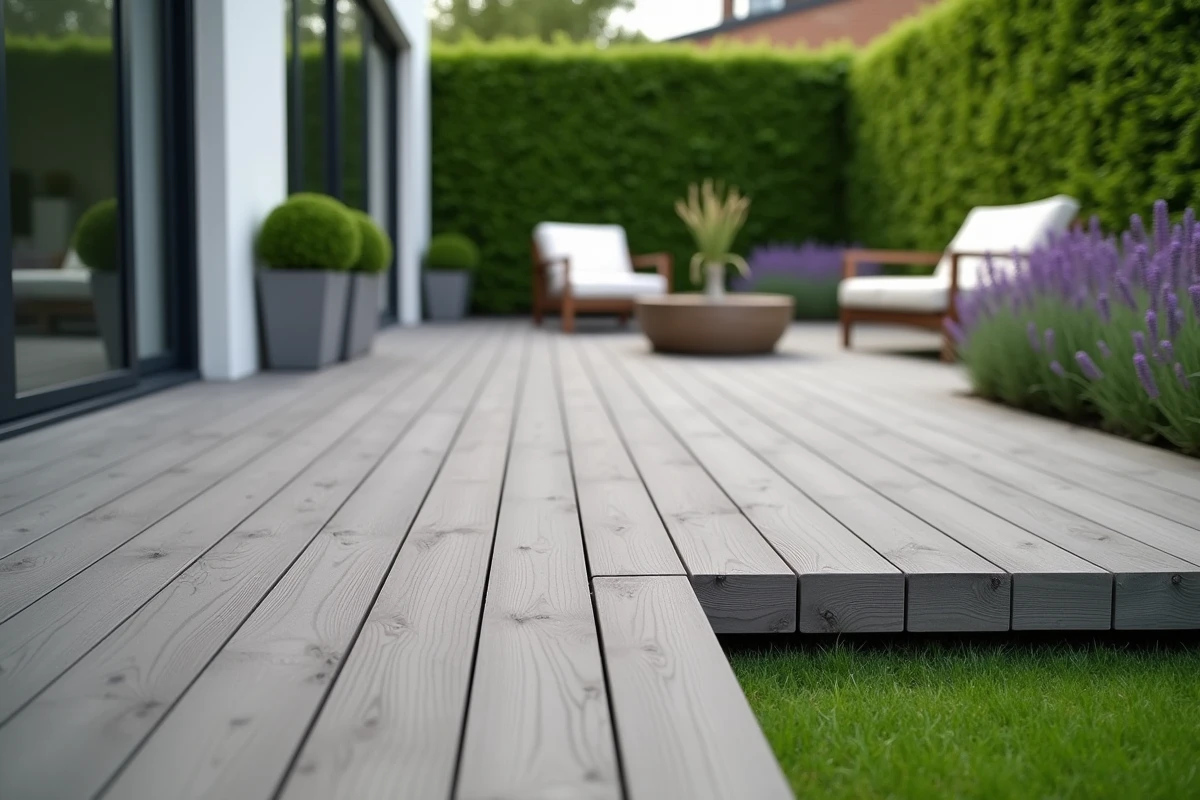
Solid wood is appealing for its natural look, but it requires regular treatment against moisture and UV rays. Composite wood, a blend of wood fibers and resin, withstands the elements without the need for annual sanding or oiling. A simple wash with a water jet is usually sufficient.
Composite reduces maintenance time without sacrificing aesthetics. It is particularly suitable for humid regions or for homeowners who do not wish to spend several weekends a year on floor maintenance.
Before installing a terrace, check local regulations: in France, a raised terrace beyond a certain height or surface area may require a prior work declaration, varying according to your municipality’s PLU.
2. Outdoor dining area with folding table
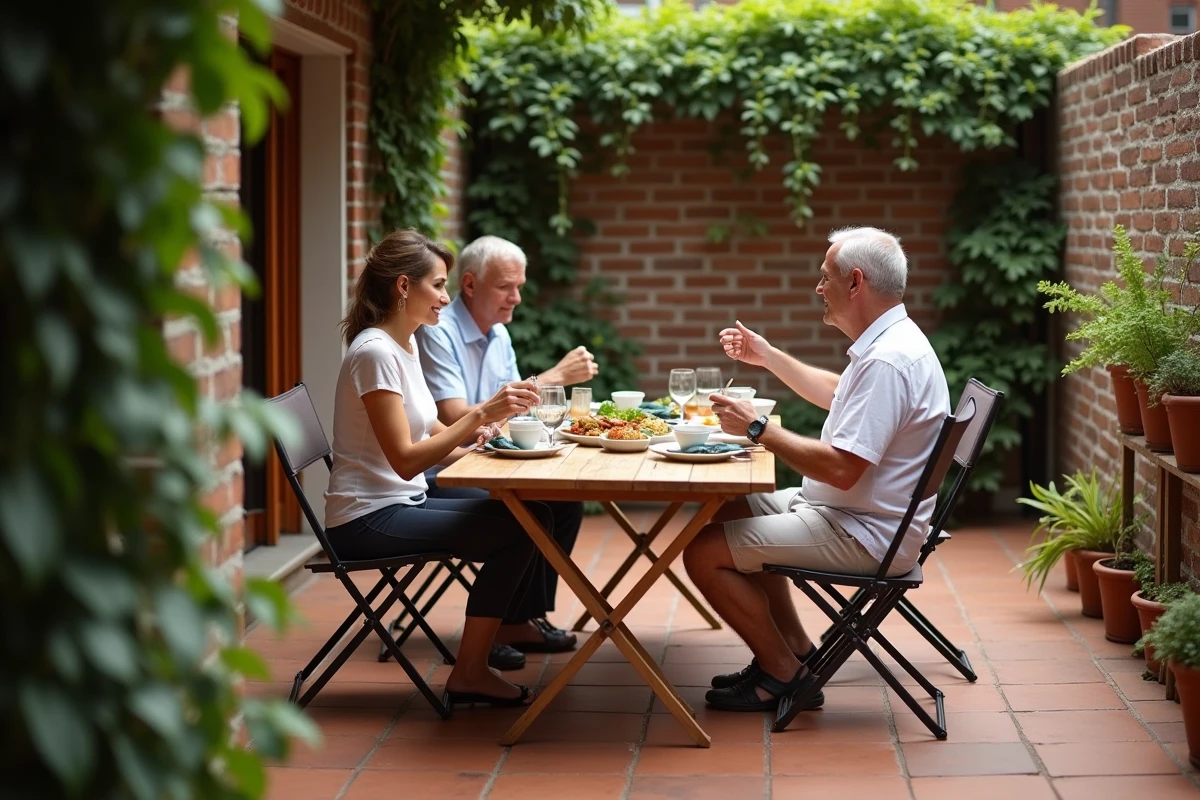
Do you have less than ten square meters outside? A folding or extendable table can accommodate four to six guests and then free up space in seconds. The space-saving is real, especially on a balcony or in a courtyard.
Opt for a tabletop made of aluminum or treated acacia. These materials handle temperature variations well and dry quickly after rain. Consider designing an outdoor space with L’Herbe sous le Pied if you are looking for additional advice on organizing each area of your garden.
3. Solar lighting along pathways
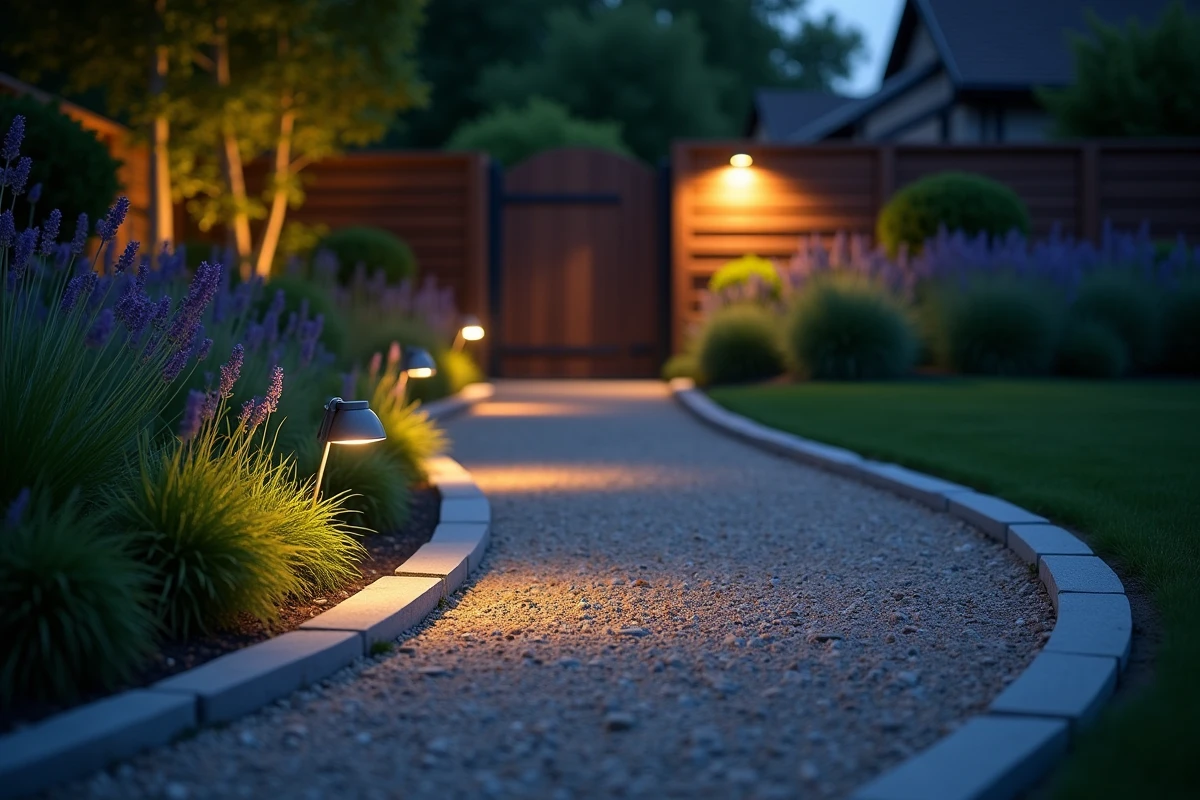
Lighting radically changes the perception of a garden at dusk. Low solar posts, planted about every two meters along a path, illuminate circulation without electrical wiring.
Well-placed lighting extends the use of the garden into the evening. Add a LED string light between two posts above the table to create a warm atmosphere without increasing the electricity bill.
4. Raised planters to structure without walls
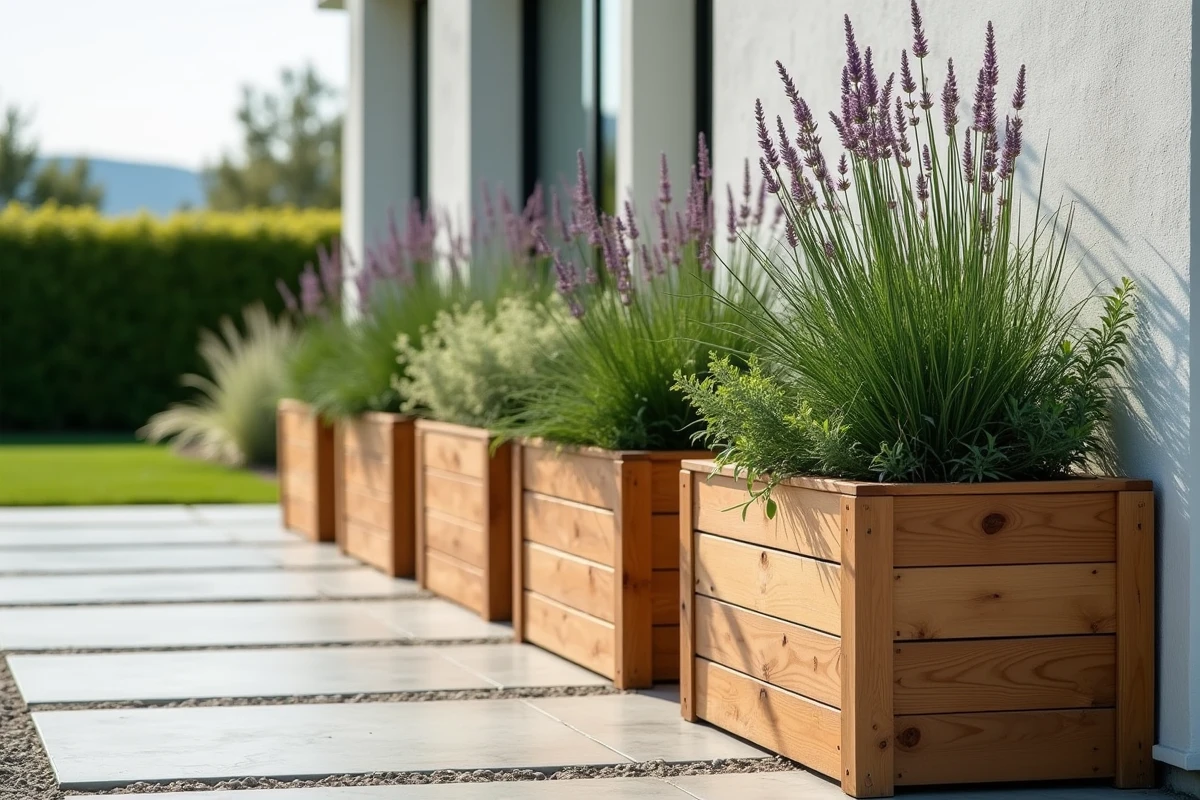
Building a low wall is expensive and fixes the layout. Tall planters, made of wood or metal, visually define a dining area or relaxation space while remaining movable.
Fill them with aromatic plants (thyme, rosemary, basil): they scent the air, attract pollinators, and end up on the plate. Raised planters separate areas without heavy construction.
5. Lean-to pergola to shade the terrace
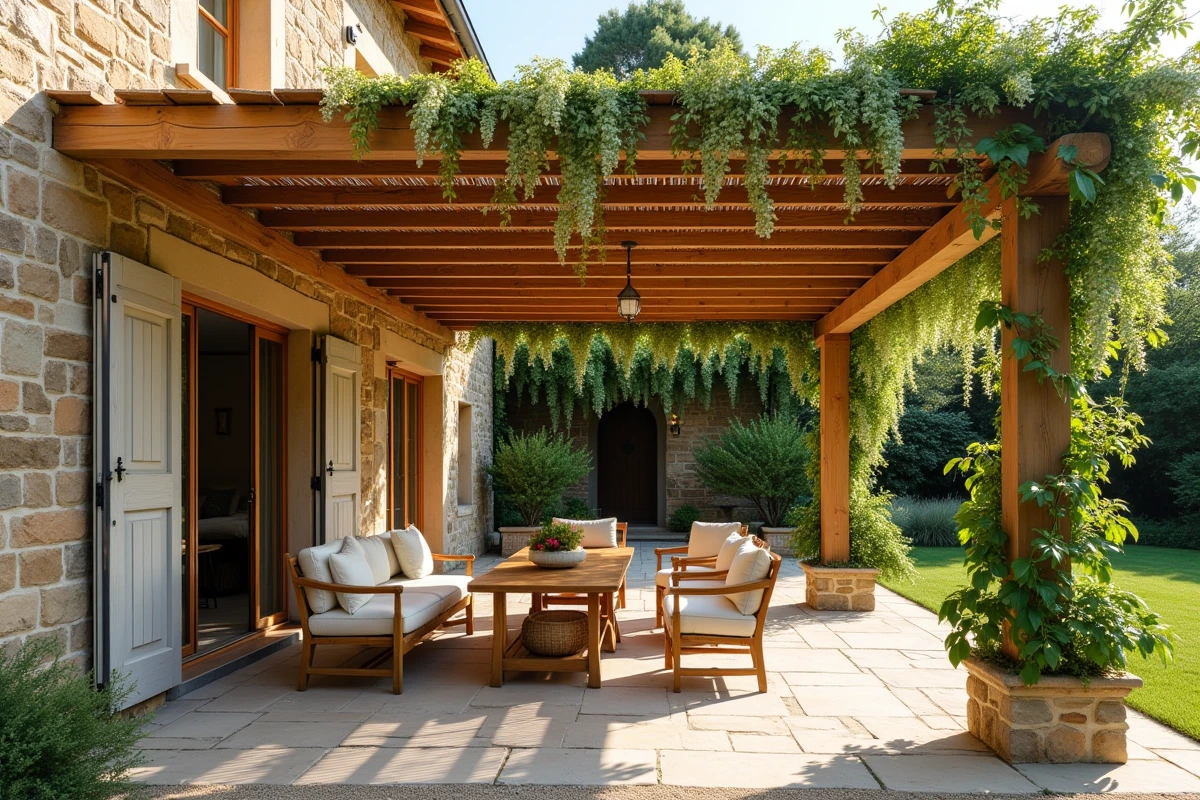
Direct sunlight makes a south-facing terrace unusable between noon and four PM in summer. A lean-to pergola attached to the facade, equipped with a retractable canopy, regulates heat while allowing light to pass through when the sky is overcast.
Powder-coated aluminum does not rust and requires no treatment. It is a durable investment that increases the usable area of the house from spring to autumn, as highlighted by professionals from the Réseau Alliance Paysage.
6. Stabilized gravel flooring
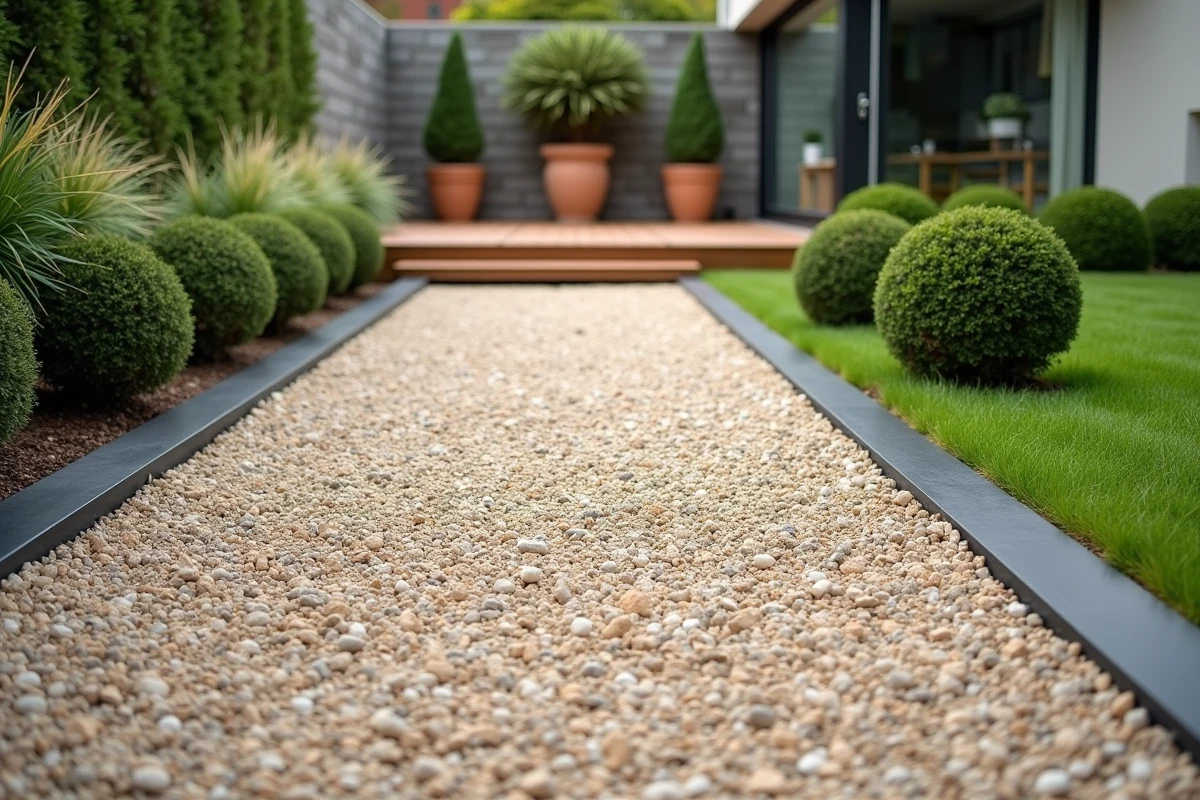
Stabilized gravel combines a honeycomb grid and crushed gravel. The result: a draining surface, accessible even in a wheelchair, and significantly less expensive than natural stone paving.
Stabilized gravel drains rainwater and limits puddles. It is suitable for secondary paths, around a garden shed, or areas with moderate traffic. Choose a fine grain size for better walking comfort.
7. Fixed outdoor kitchen with countertop
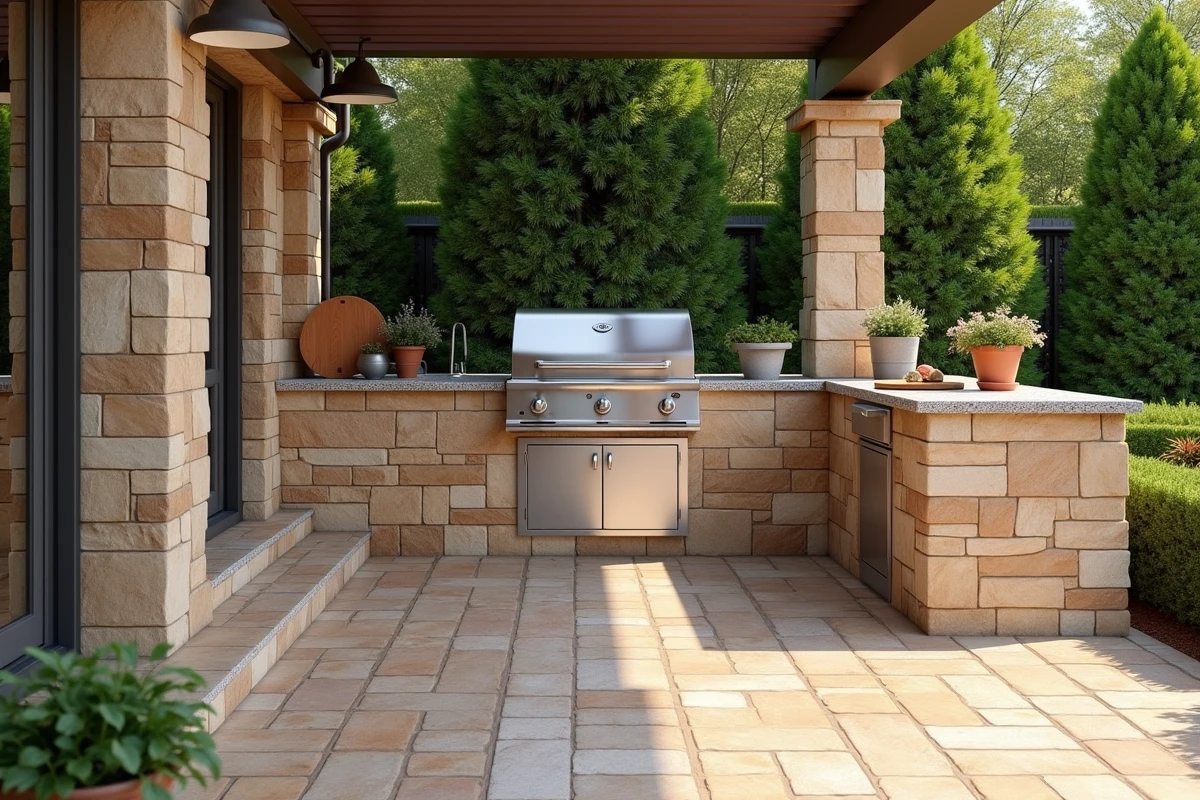
Installing a solid countertop next to the barbecue transforms the grilling chore into a real pleasure. An outdoor sink connected to the water supply allows you to wash vegetables on-site, without trips back and forth to the indoor kitchen.
Place a protective mat under the cooking area to preserve the floor from grease splatters. Recommended materials include:
- Reconstituted stone or waxed concrete for the countertop, heat-resistant
- Stainless steel for the sink and backsplash, easy to clean
- Non-slip tiles on the floor, suitable for splashes
8. Vertical green wall for small spaces
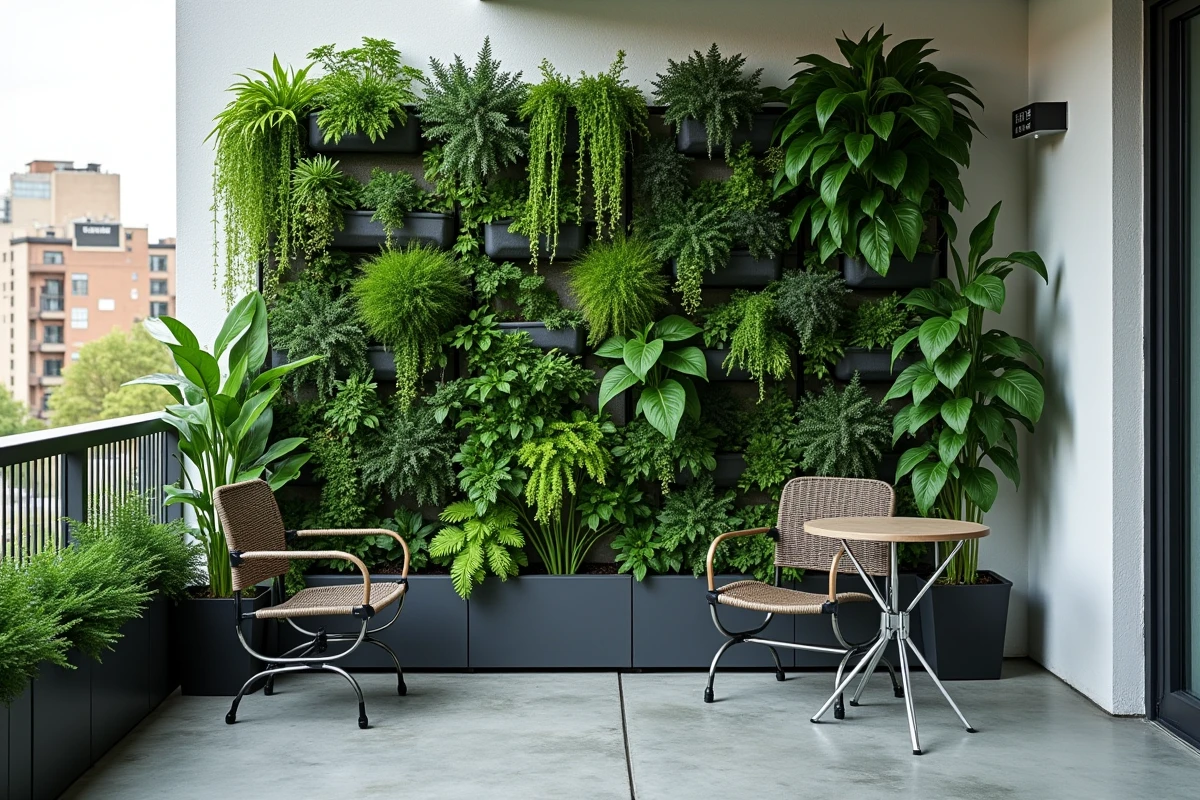
When floor space is limited, take advantage of height. A green wall, mounted on a trellis or felt pockets attached to a fence, adds greenery without encroaching on the terrace.
A green wall creates a strong visual effect on less than one square meter of floor space. Choose plants suited to the exposure: ferns and ivies for a shaded wall, sedums and grasses for full sun.
9. Modular furniture with integrated storage
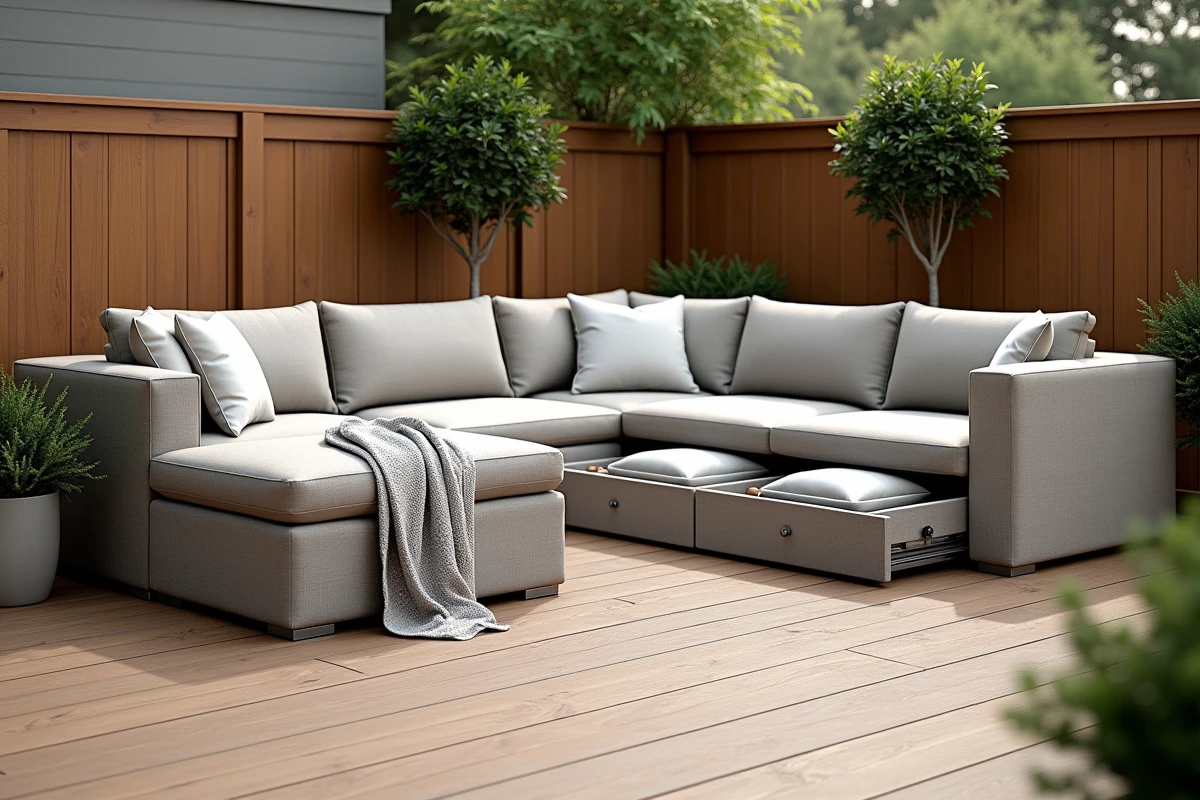
A bench with a seat that opens to a storage compartment holds cushions, blankets, and outdoor games. This type of furniture serves two functions within the same footprint, a decisive advantage for small spaces.
Ensure that the storage compartment is ventilated to prevent mold. Woven resin models handle humidity well and can be cleaned with a sponge. Pair them with a matching coffee table for a cohesive relaxation area.
10. Low plantings along the edges to guide the eye
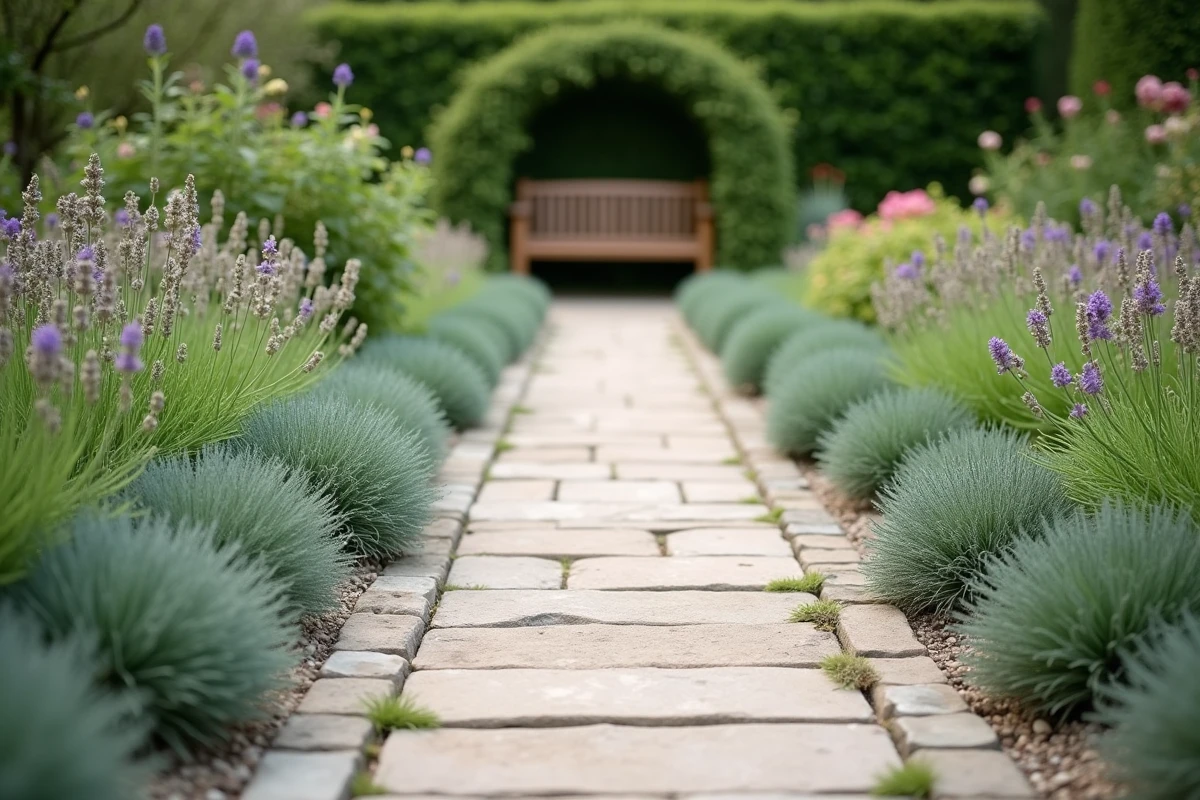
Low plantings along a pathway or around a terrace create a guiding line that directs the eye toward the back of the garden. Lavender, dwarf boxwood, or compact grasses fulfill this role without obstructing the view.
Vegetal borders structure the space without partitioning it. They require annual pruning and resist drought well once established. Plant them in a staggered pattern for a more natural look than a strict alignment.
Each of these ideas works alone, but their combination yields the best results. Start with the most pressing constraint in your space (lack of shade, unusable ground, lack of storage) and gradually add the other elements. A well-thought-out outdoor space rarely comes together in a single weekend, and that’s precisely what makes it sustainable.