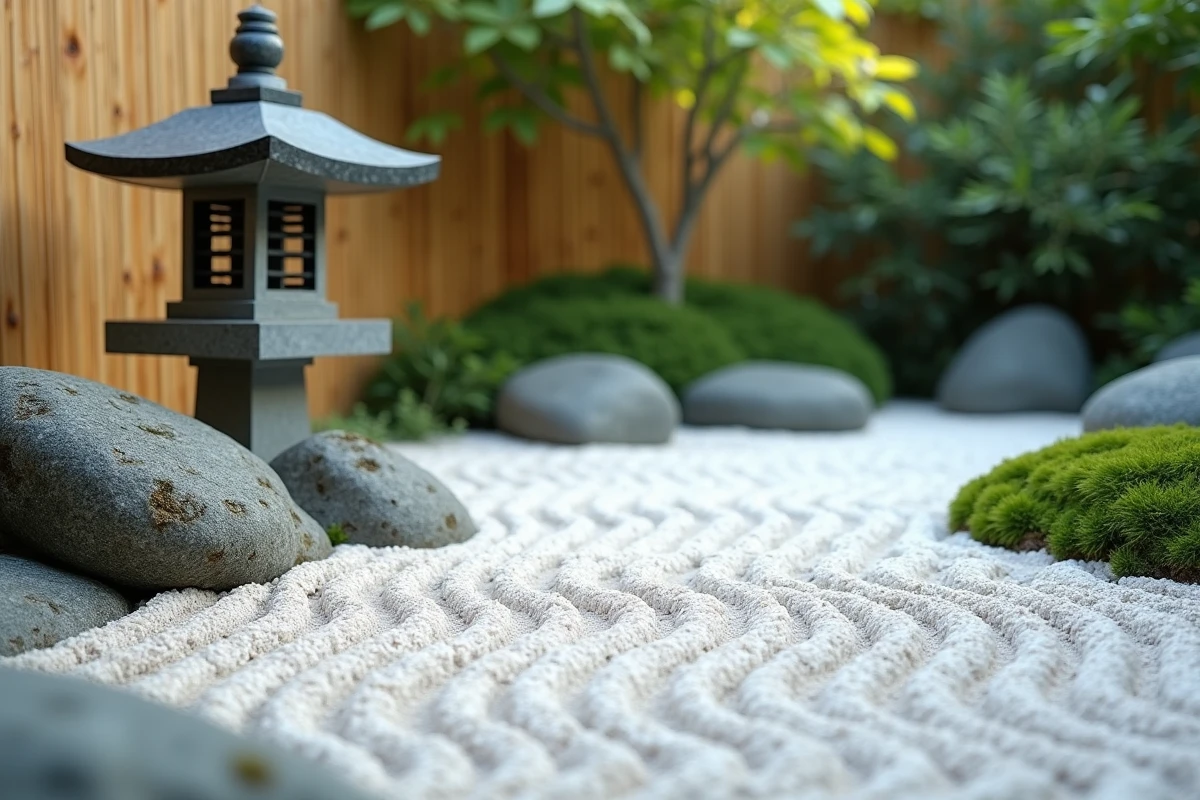
A plot of three meters by four, wedged between a fence and a terrace: this is often the constraint with which one starts a zen garden project. The good news is that this type of layout works better on a small surface than a traditional flower bed. The zen garden relies on simplicity, minerals, and a few well-placed plants. The challenge is knowing where to start when your hands are in the gravel.
Prepare the soil before laying any stones
We often see photos of perfectly raked zen gardens, but no one shows the groundwork preparation. Yet, this is the step that determines everything else.
Decorative gravel laid directly on bare soil will quickly become overrun with weeds in a matter of weeks. You need to excavate the soil by about fifteen centimeters, lay down a good quality geotextile fabric, and then spread the gravel on top. Without this separating layer, you’ll spend your time weeding instead of contemplating.
The choice of gravel also matters. To achieve the typical raked sand effect of karesansui, a light and fine gravel, such as marble or crushed limestone gravel, is preferred. A gravel that is too coarse prevents you from creating clear patterns with the rake. Opinions vary on this point, but a size between a few millimeters remains the most manageable for regular use.
For those who wish to discover the Jardin Jade site, there are useful resources on material selection and organizing a zen outdoor space.
Stones and minerals: composing a zen garden without overloading
The beginner’s reflex is to accumulate decorative elements. A Japanese lantern here, a resin Buddha there, three fountains, and a bridge. The result: a themed mess, not a calming space.
A successful zen garden consists of a maximum of three to five elements. We’re talking about stones, a potential water feature, and a few plants. Each object placed in the space must have a visual reason for being there.
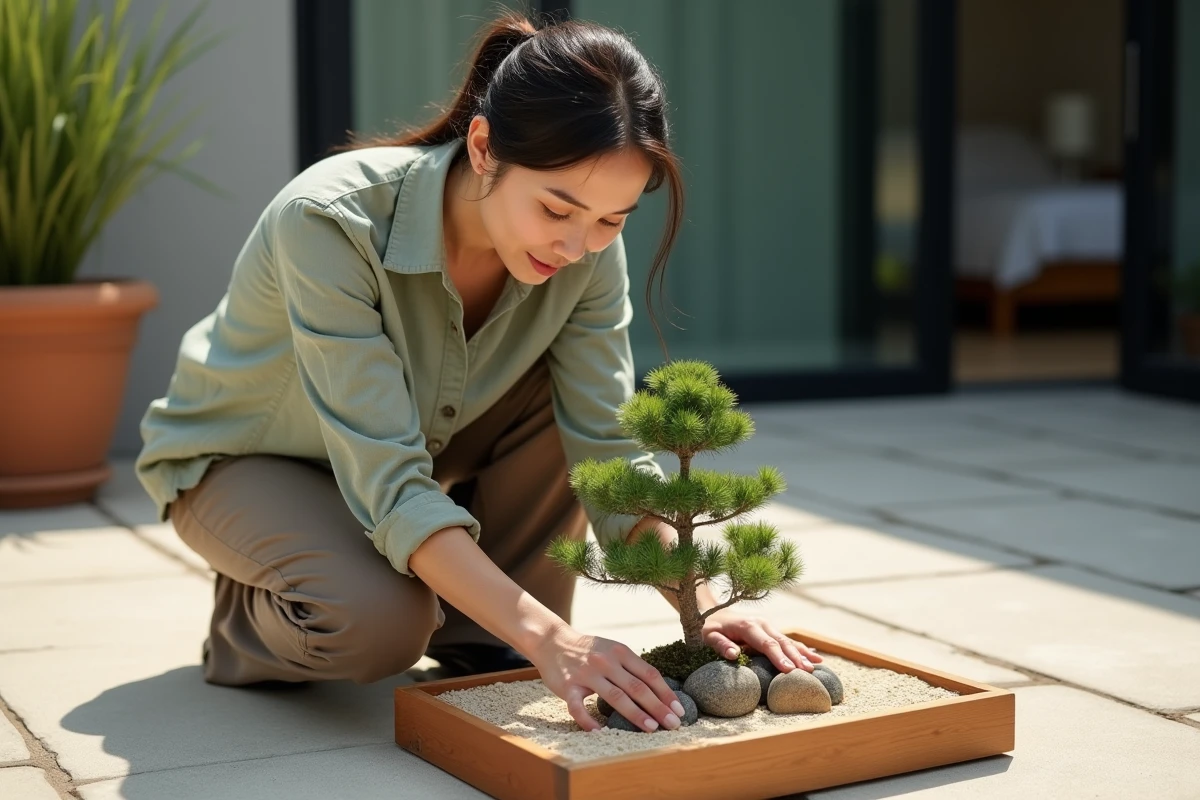
For the stones, work in odd groups (three or five). Arrange them asymmetrically, never in a line. The idea comes from the Japanese principle of odd numbers, which creates a deliberate imbalance perceived as more natural by the eye.
Choose local stones rather than imported ones
A common mistake is to buy decorative rocks that have no connection to the surrounding landscape. White river pebbles placed on clay soil in Haute-Savoie are quite noticeable. Using stones from the region results in a more coherent outcome and often costs less, as it avoids long-distance transport.
You can also salvage flat stones to create a stepping stone path between the terrace and the zen corner. A few slabs spaced a natural step apart are enough to structure the pathway without pouring concrete.
Plants for a zen garden: focus on evergreen foliage
The traditional Japanese garden relies little on flowers. It is the textures of foliage, shades of green, and silhouettes of shrubs that do the visual work, season after season.
The plants to prioritize include:
- Japanese maple (Acer palmatum), for its finely cut leaves that take on coppery hues in autumn, even in a pot on a terrace
- Nandina domestica (sacred bamboo), compact and evergreen, which adds a touch of red without special maintenance
- Ferns and hostas in shaded areas, to cover the ground with soft textures at the foot of the stones
- Cloud-pruned pine (niwaki), which immediately gives a Japanese character but requires regular pruning once or twice a year
Limiting the palette to four or five species prevents the “garden center” effect where everything mixes. Choose plants that remain beautiful all year round rather than spectacular perennials for just two weeks.
Bamboo: good or bad idea
Bamboo seems logical in a Japanese-inspired garden. In practice, running species (Phyllostachys) invade neighboring plots in just a few seasons. If you are keen on bamboo, opt for a non-running species like Fargesia, or install a rhizome barrier before planting. Without this precaution, you create a problem that is much more costly to fix than to prevent.
The indoor mini zen garden as an alternative without outdoor space
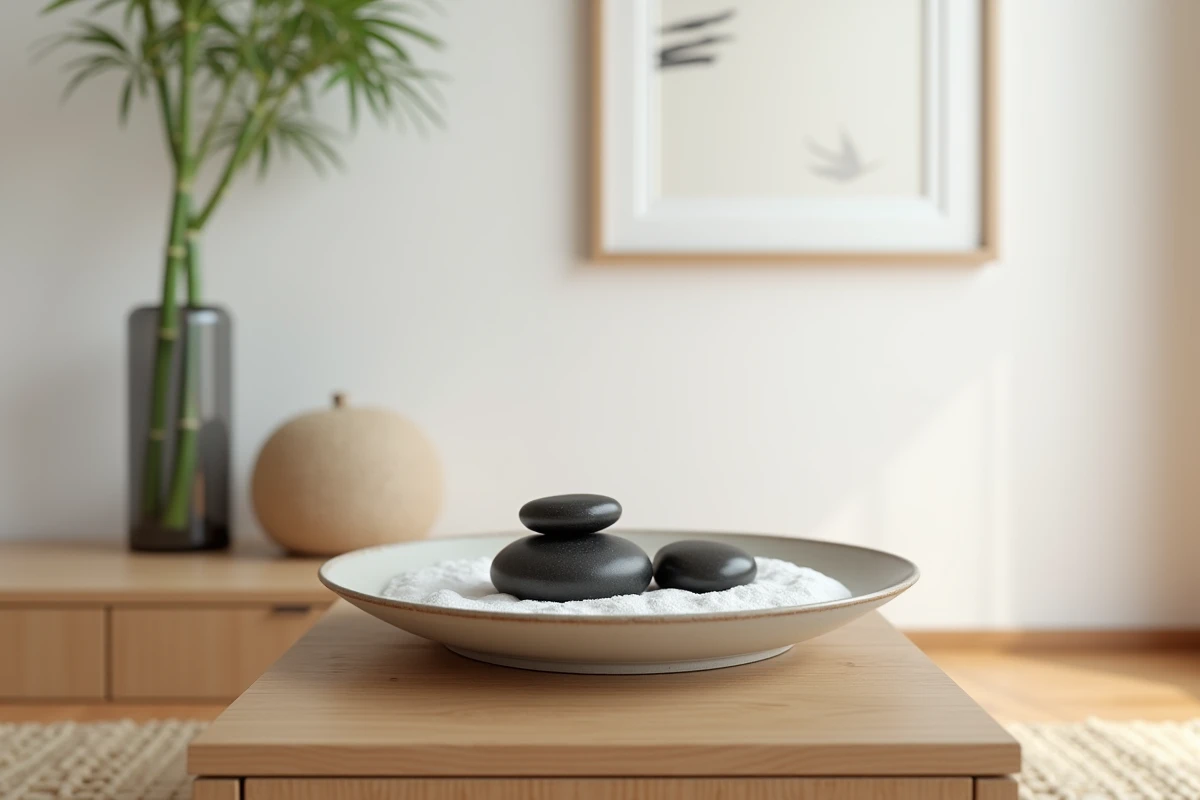
In recent years, the mini zen garden for the office or shelf has gained popularity as a tool for micro-breaks. The principle is simple: a wooden or ceramic tray, fine sand, three stones, and a small rake.
It’s not just a decorative object. Raking the sand for a few minutes between tasks acts as a centering exercise. Some therapists recommend this practice in the same way as a breathing exercise: focusing attention on a slow, repetitive gesture to cut off the mental flow.
Good quality trays can be found for a modest budget. The trick is to choose very fine sand (like Loire sand) and natural stones rather than plastic kits sold in supermarkets, which give an artificial look.
Water and lighting: two details that change the atmosphere of the garden
Water is a central element of the Japanese garden. You don’t need a koi pond to incorporate it. A tsukubai (small stone basin where water flows slowly) or a simple closed-loop fountain is sufficient. The sound of flowing water creates an ambient noise that masks neighborhood sounds, enhancing the feeling of isolation.
For lighting, avoid white LED spots aimed at the stones. Low warm light lanterns placed on the ground create a much more coherent effect with the zen spirit. Light from below, gently, never directly. A few discreet light points along the stepping stone path are enough to make the space usable in the evening without breaking the ambiance.
A zen garden does not require a large budget or a big plot of land. It mainly requires restraint in choices, proper soil preparation, and materials suited to the local climate. It’s the kind of project where removing an element almost always improves the result.