A two-stroke engine doesn’t always have the last word when it comes to power, even if its reputation seems unassailable. The technical reality brings us back to order: a poorly thought-out reduction ratio or a poorly calibrated auger can hinder efficiency, even on high-end models. A detail that can weigh heavily at the time of purchase: each brand often imposes its own auger diameters. As a result, the interchangeability of parts can sometimes be a puzzle in case of repairs or replacement needs.
These technical subtleties and design differences mean that one should not rely on appearances. To get the best out of this equipment, it is important to pay attention to several parameters, often overlooked during the purchasing decision.
Understanding the advantages of a thermal auger for the garden
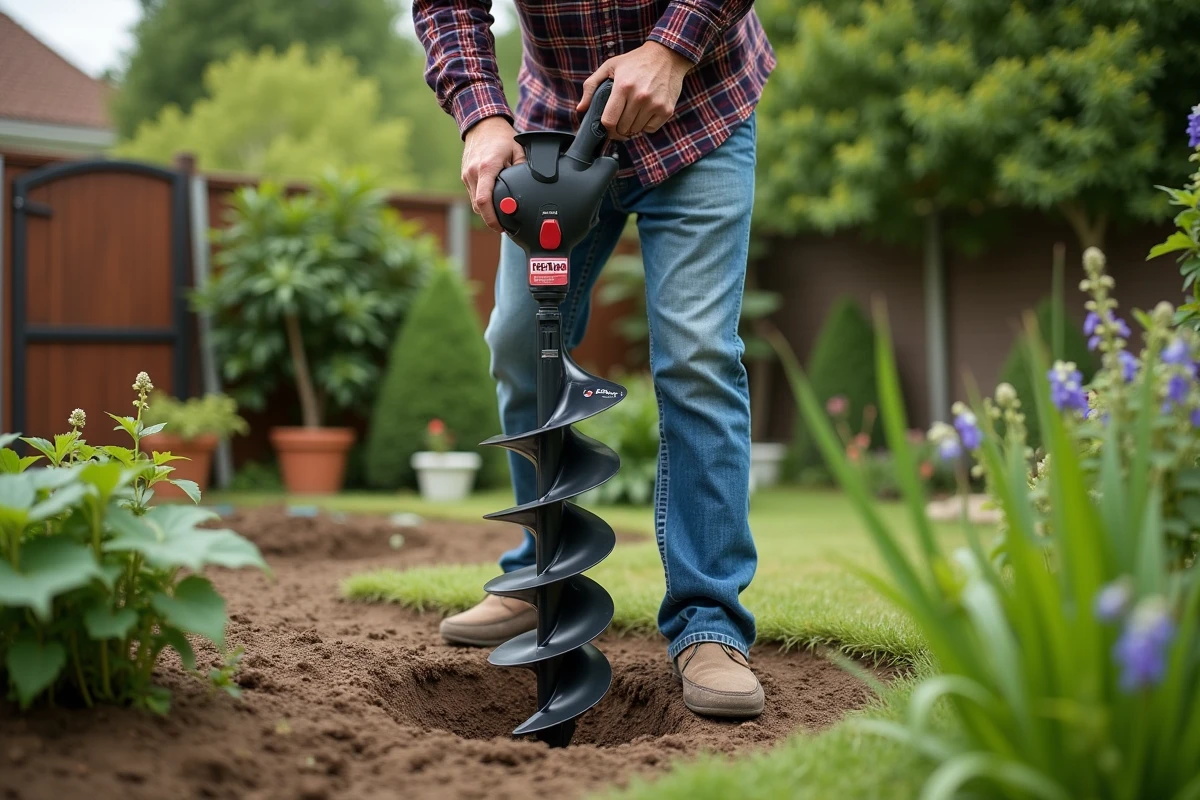
The thermal auger stands out as the essential ally of gardeners and landscaping professionals when faced with compact soils. Thanks to its gasoline-powered thermal engine, it delivers the necessary power to drill quickly and efficiently, where manual tools or electric models eventually falter. On clayey, stony, or hard ground, it naturally asserts itself. Autonomy and sturdiness: the winning duo for tasks that leave no room for approximation.
Far from being limited to creating holes for planting, this tool adapts: fence installation, preparing a slab or shelter, earthworks… Its versatility attracts both the knowledgeable amateur and the demanding professional. Some models allow for up to 120 holes per day. Speed and consistency are guaranteed, without sacrificing precision.
Of course, there are trade-offs: a significant weight, noticeable decibels, and more maintenance than with a manual version. But the speed of execution and the ability to tackle all types of terrain quickly make these constraints forgettable.
Here’s what this tool concretely allows:
- Work much faster during planting
- Easily install posts or stakes, without excessive effort
- Intervene on difficult soils, whether clayey, stony, or very dry
For those who want to delve deeper into the choice and use of the thermal auger, discovering Le Jardinier Décorateur allows for an in-depth exploration of the best practices and technical aspects related to this motorized tool. Mastering this type of equipment is a step forward in managing the garden and outdoor landscaping work.
What criteria to prioritize for choosing a thermal auger?
Choosing a thermal auger is not just about falling in love with a color or shape. First, the engine power stands out as the main criterion: generally between 1500 and 2500 watts, it determines the capacity to penetrate the most resistant soils. The cylinder capacity, from 40 to 60 cm³, ensures the energy reserve needed for prolonged work.
Next comes the question of auger diameter and length. Depending on the project—planting, fence installation, foundations—the tool must be adaptable: augers from 7 to 350 mm in diameter and lengths from 60 to 80 cm, extendable with extensions. Hardened steel augers withstand the distance and ensure a clean result. For deeper holes, adding an extension is easily considered.
The weight, often between 8 and 15 kg, directly affects handling, especially during long sessions. Non-slip handles, combined with anti-vibration systems, make usage much more comfortable.
Before any purchase, it is worth taking a closer look at the range of accessories and safety devices offered. Commonly found are:
- Extensions and bits of varying diameters
- Adjustment keys
- Protective equipment: gloves, goggles, hearing protection
The price ranges from 180 to 570 euros, depending on the configuration, robustness, and richness of accessories. Whether the goal is to undertake major work or to intervene occasionally, every detail deserves to be weighed according to real needs.
User manual: successfully using and maintaining your auger daily
Before starting, you need to prepare the ground. Clear the area of stones, roots, and other obstacles: the auger will benefit in longevity, and drilling will be done regularly. Adopt a stable posture. Equip yourself with gloves, protective goggles, and reinforced shoes. With this type of tool, safety leaves no room for improvisation.
Starting should be done on a flat surface. With the non-slip handles firmly in hand, accelerate gradually. There’s no need to force: the auger descends at its own pace. On hard soils or for deep holes, proceed in stages. Remove the auger regularly to clear the soil and avoid any blockage. When handled well, the machine allows for up to 120 holes in a day, a significant advantage for planting or fence installation.
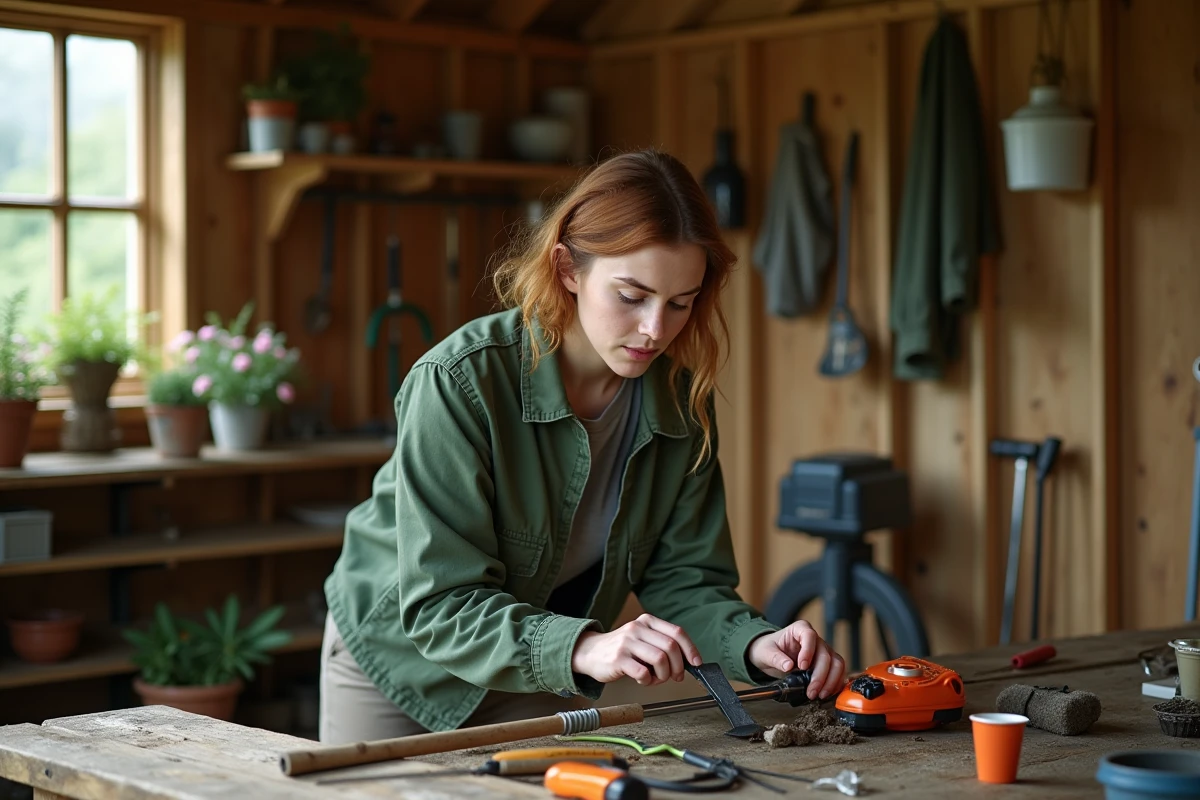
Rigorous maintenance is essential to preserve efficiency and reliability. After each use, clean the auger, remove soil residues, check the sharpness and attachment. Lubricate the moving parts to limit wear, monitor the air filter, and empty the fuel if the tool is to remain unused for a while. As soon as penetration becomes less smooth, sharpen the blade.
This regular care makes all the difference: the thermal auger then retains its capabilities, regardless of the terrain or frequency of use. Reliability and longevity are achieved at the cost of precise actions, far from automatic routines.
Over the seasons, a well-chosen and maintained thermal auger transforms the relationship with the garden: less fatigue, more efficiency, and the satisfaction of seeing projects take shape without missteps.