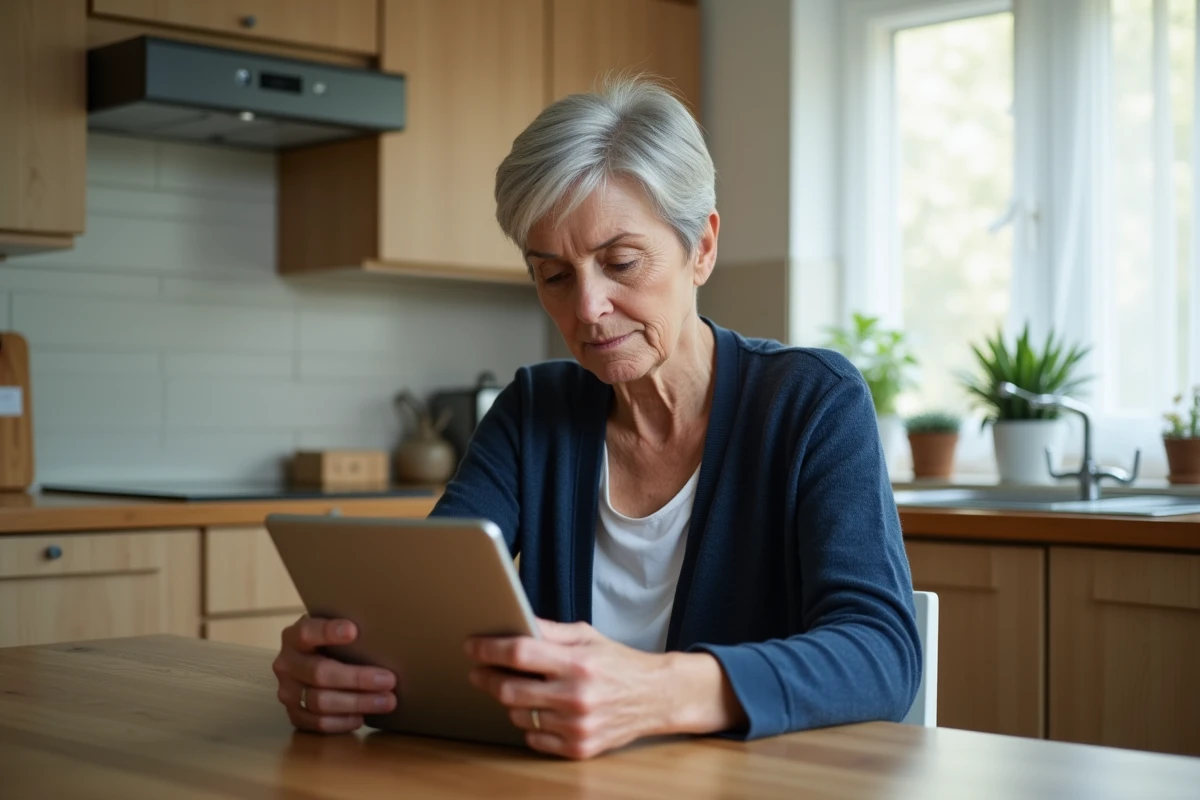
Netsoins, developed by Teranga (now Orisha Socialcare), is no longer just a data entry portal for EHPAD teams. The platform is part of a unified DUI ecosystem, with version v2026.05 reflecting a sustained update pace. For family caregivers as well as professionals working at home within the DomusVi network, understanding the technical architecture of this tool is crucial for the quality of remote care monitoring.
Netsoins Technical Architecture: Custom URLs and Access Management by Establishment
Each DomusVi establishment has its own login URL, constructed in the format establishmentname.netsoins.com. This segmentation is not trivial: it isolates the data of each structure and ensures that access rights are confined to the relevant establishment’s perimeter.
We observe that this URL structure often generates confusion. A professional transferred from one DomusVi site to another cannot reuse their old credentials on the new portal. Credentials are systematically provided by the employing structure, never generated by the user themselves.
The main portal hsm.netsoins.com serves as an entry point for network administrators and profiles with access to multiple establishments. Field caregivers, on the other hand, go through the URL dedicated to their site. This distinction should be clarified upon starting the job to avoid cascading connection errors, especially during replacements or night shifts.
To better understand how to connect to Netsoins Domusvi in a home care context, it is important to distinguish the “establishment” pathway from the “home” pathway, the latter often involving access via mobile browser without a dedicated VPN.
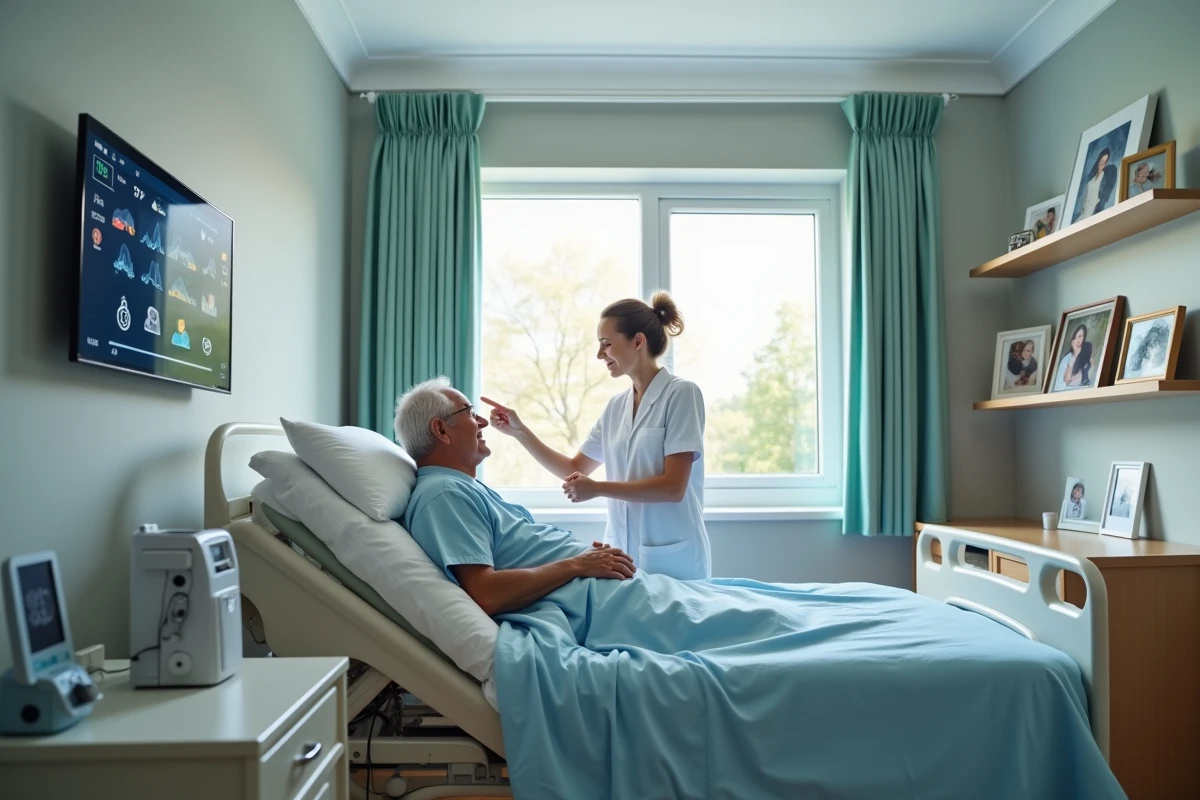
Netsoins Mobile Access: Data Entry at the Resident’s Bedside and Tracking During Rounds
Mobile access has become an operational criterion, not just a convenience. Teams enter care actions directly on tablets or smartphones, at the resident’s bedside or during home visits. This practice profoundly changes traceability: timestamps correspond to the actual action, not to a re-entry at the end of the day.
Technically, Netsoins operates in a responsive web mode. No native application is required. An up-to-date browser (Chrome, Safari, Firefox) is sufficient. We recommend checking two points before the first mobile connection:
- The HTTPS certificate of the portal must be recognized by the browser. A security warning generally indicates a cache issue or a poorly entered URL, not a real vulnerability.
- The network connection (minimum 4G or establishment Wi-Fi) must be stable. A disconnection during data entry can lead to data loss if the form has not been validated.
- The “private browsing” mode prevents the saving of session cookies, which forces a reconnection with each opening. This should be avoided on tablets shared among caregivers, where a dedicated browser profile is preferable.
This mobile dimension is particularly relevant for monitoring seniors at home within the DomusVi network, where caregivers do not have access to a fixed workstation on-site.
Data Security and GDPR Compliance on the Netsoins DomusVi Portal
The data hosted on Netsoins falls under the HDS (Health Data Hosting) regime, with encrypted exchanges and access control by profile. Specifically, each action (consulting a file, modifying a treatment, adding an observation) is timestamped and associated with the connected professional’s identifier.
GDPR compliance is not limited to hosting. It also concerns the daily practices of users. A caregiver who shares their credentials with a colleague compromises traceability and engages the responsibility of the establishment. Similarly, leaving a session open on a shared tablet constitutes a vulnerability that internal audits regularly flag.
Best Practices for Logging Out and Session Management
Closing the browser tab is not enough to end a Netsoins session. The explicit logout button in the interface invalidates the session token on the server side. Without this step, the session remains active for a duration defined by the administrator (usually several tens of minutes).
For structures using tablets rotated among several caregivers, we recommend a browser profile per user or, failing that, a systematic logout followed by cache clearing. This rigor protects both the resident and the professional.

Troubleshooting Netsoins Connection: Identifying Common Causes of Blockage
The majority of connection issues do not stem from a portal outage. Three causes account for most support tickets:
- Incorrect or outdated URL: a change of establishment name or a migration to a new Netsoins instance renders the old address inoperative. The reflex is to ask the health manager or IT administrator for the updated URL.
- Expired password: the security policy requires periodic renewal. The error message does not always specify that it is an expiration, which misleads users into thinking it is a technical issue.
- Incompatible or outdated browser: Internet Explorer, still present on some EHPAD workstations, causes display and connection malfunctions. Switching to a supported browser resolves the issue without support intervention.
The Orisha Socialcare technical support intervenes as a last resort, once these checks have been made. Response times vary depending on the ticket’s criticality and the size of the establishment.
Netsoins Password Reset
The procedure goes through the “Forgot Password” link on the login page. A reset email is sent to the address associated with the professional account. If this address is a shared service mailbox, multiple caregivers may receive the link, which raises a confidentiality issue. Associating each account with a named address remains the best practice.
Remote care monitoring via Netsoins DomusVi relies as much on the technical mastery of the tool as on the daily discipline of use. The reliability of the entered data directly depends on the rigor of each professional during connection, data entry, and logout. A well-configured portal with trained users transforms traceability into a true lever for quality care.