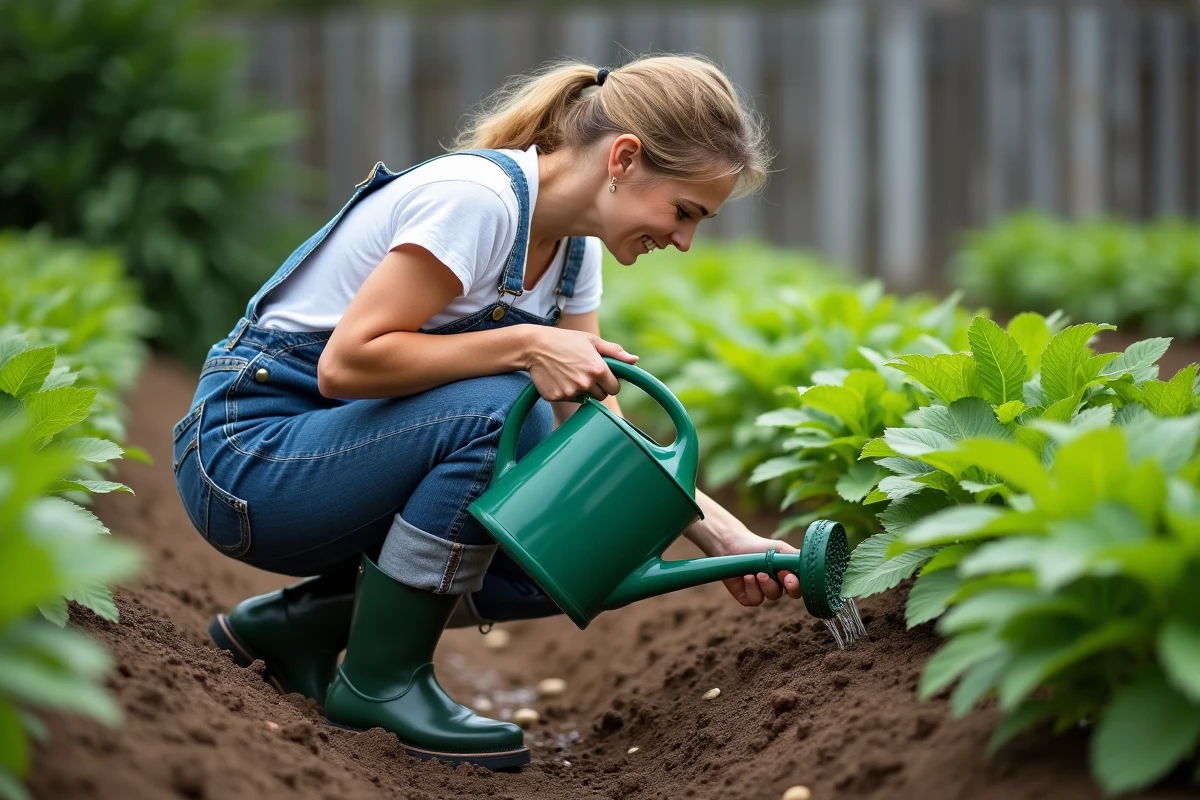
On a clay-loam soil that cracks at the end of June, a row of potatoes without water for ten days already shows signs: curled foliage, stagnant tubers. Watering potatoes is not just about wetting the soil when it’s hot. Yield is gained or lost depending on the timing of water delivery, how it is applied, and the nature of the soil under the ridges.
Useful soil reserve: the parameter that irrigation alone cannot compensate for
Before discussing frequency or volume, we must look at what is happening below the surface. The potato develops a shallow root system, often limited to the first 60 centimeters. All the water it draws comes from this superficial layer.
If the soil is sandy, this layer retains little water between two applications. If grown in deep loam, the useful reserve is much better and waterings can be spaced out more. This discrepancy explains why two neighboring plots, irrigated in the same way, yield very different results.
Technical institutes like Arvalis now recommend thinking about irrigation based on thresholds of useful soil reserve, not just on a calendar. The idea is to concentrate water during the phases when the plant needs it most, rather than distributing regular applications throughout the cycle. To better understand when to water potatoes for good yield, it is beneficial to cross-reference the growth stage with the actual state of the soil.
In practice, pushing a soil auger or a simple rebar into the ridge after a few days without rain already gives an indication. If the soil resists strongly from the first few centimeters, it is time to water. If the soil remains soft and cool at 20-30 cm, you can wait.
Watering potatoes at tuberization: the most critical window
Most guides describe the complete cycle, from planting to harvest. On the ground, one period dominates all others: tuberization and tuber swelling. This is the stage when the plant produces and fills its tubers, roughly between flowering and the beginning of leaf yellowing.
Water stress at this precise moment results in small, misshapen, or cracked tubers. Before tuberization, the plant tolerates moderately dry soil better. After, when the foliage yellows, watering brings little benefit and can even promote rot.
Concentrating applications at the right stage
The recent trend, reinforced by drought episodes in France, is to reduce early applications to keep water resources available during swelling. In soils with low reserves, irrigation starts a little before flowering. In deep soils, winter reserves often suffice until this stage.
Specifically, we monitor two things:
- The appearance of the first flowers, which signals the beginning of tuberization and the moment when water demand increases significantly
- The state of the foliage in the middle of the day: a temporary curling at noon is normal in high heat, but foliage still wilted in the morning indicates a real deficit
- The weather for the next five days: if no rain is forecast and the soil is dry on the surface, irrigation should be triggered without delay
Potato watering method: drip versus sprinkler
Sprinkling remains the most common technique in gardens as well as in production. Water is applied from above, the foliage gets wet, and some of the water evaporates before reaching the soil. The main risk is well-known: wet foliage in the evening promotes late blight, the most dreaded disease in potatoes.
Watering in the morning rather than in the evening allows the foliage to dry during the day. This simple action significantly reduces fungal pressure. If watering can only be done in the evening, it is better to direct the water at the base of the plants, under the foliage.
Drip irrigation is gaining ground
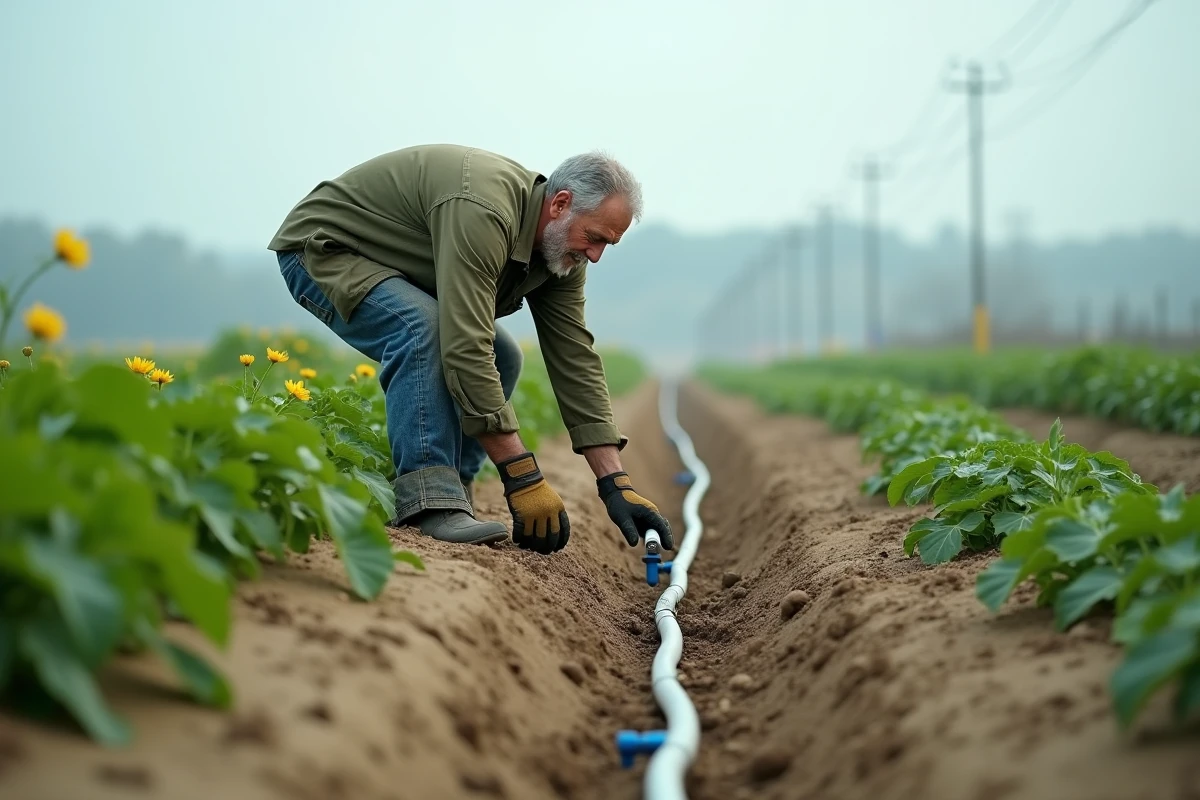
In production basins facing significant water resource pressures, drip irrigation (either surface or buried) has been progressing for several campaigns. Feedback shows significant water savings compared to sprinkling, while maintaining or improving marketable yield.
In gardens, a simple porous hose laid along the row, under a mulch, replicates this principle. Water arrives directly in the root zone, the foliage stays dry, and evaporation losses decrease significantly. Returns vary on the initial investment depending on the cultivated area, but for a few rows of potatoes, the setup remains accessible.
Mulching and hilling: two levers that reduce the need for watering
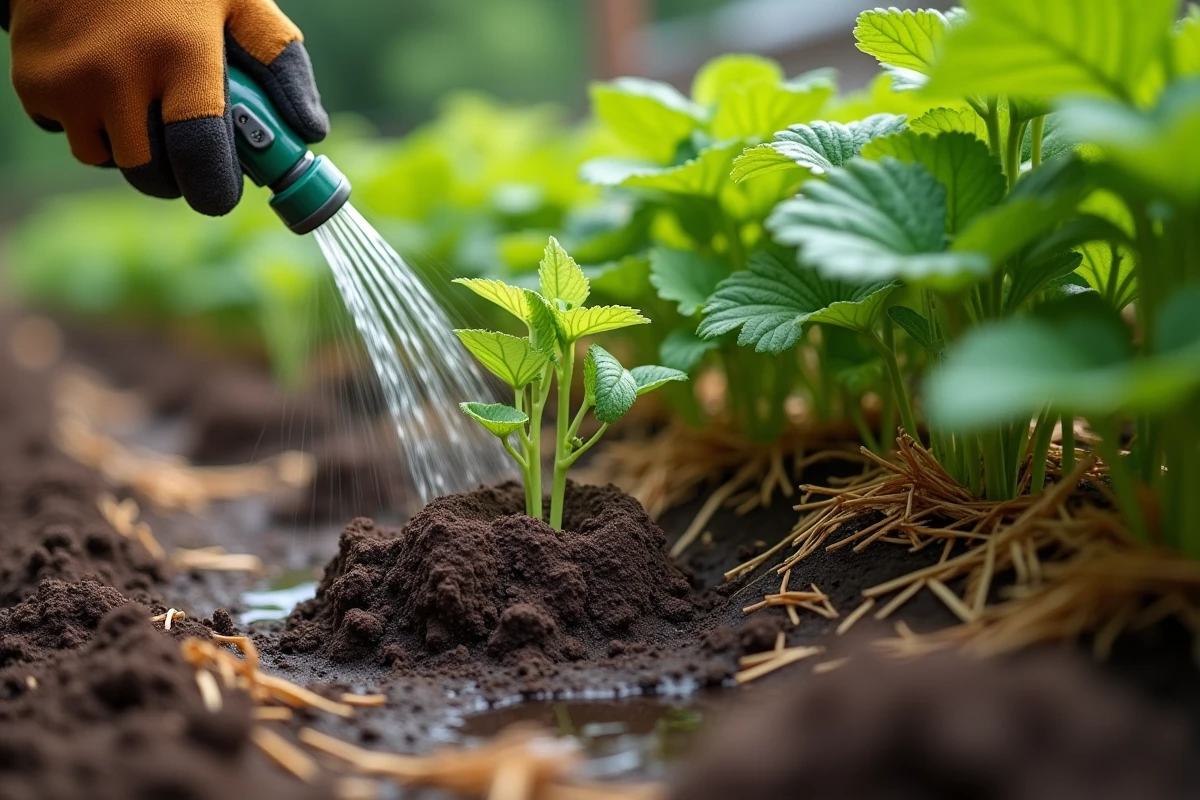
A good organic mulch (straw, hay, dried clippings) placed between the rows after hilling limits soil evaporation and maintains a more stable moisture level around the tubers. This allows for spaced out waterings without the plant suffering.
Hilling itself plays a often underestimated role. By bringing soil around the base, we increase the volume of fresh soil around the forming tubers. Regular hilling reduces the exposure of tubers to sunlight and heat, which complements the effect of watering.
- Hill for the first time when the plants reach about twenty centimeters, then renew two to three weeks later
- Mulch after the last hilling to retain moisture without hindering growth
- Avoid overly thick mulches placed on already saturated soil, which can promote slugs and rot
On well-prepared, properly hilled, and mulched soil, watering needs can decrease significantly, even in dry summer conditions. Watering potatoes is not managed by feel: by combining soil reading, proper timing around tuberization, and suitable mulching, we can steer the harvest without wasting water.